NEET Demo / Analysis Session Evaluation
I attend demo classes and still feel confused. Teachers speak confidently and the demo looks polished, but I cannot tell if the course will deliver results after three months. I do not know what questions to ask, what red flags to watch, and what proof to demand before enrolling. I worry about hidden costs, weak test analysis, poor doubt resolution, and no parent reporting. I also worry that demos focus on easy topics and not NEET level difficulty. I need a demo evaluation checklist that includes faculty approach, NCERT alignment, test quality, feedback cycle, scheduling reliability, and whether the institute has a real plan for NRI students studying in USA schools.
A Strategic Evaluation Guide for USA Based NRI Families Before Choosing NEET Coaching
For USA-based NRI families preparing for the National Eligibility cum Entrance Test (NEET), booking a demo class is often the first step before committing to a coaching program.
However, many parents treat demo classes as a formality rather than a strategic evaluation tool. In reality, a well-assessed demo class can determine whether a coaching format aligns with:
- Student learning style
- Time zone practicality
- Faculty quality
- Curriculum alignment with NCERT
- Mock test integration
- Doubt resolution mechanism
Since NEET is conducted by the National Testing Agency (NTA) and is rank-based, preparation quality directly affects admission outcomes.
This chapter explains:
- Why demo classes matter
- What to observe during a demo
- How to evaluate teaching methodology
- Questions parents should ask
- Live vs recorded demo differences
- Red flags to watch for
- How to compare multiple demos
- When to book a demo
- How many demos are enough
This guide helps families use demo classes as an informed decision-making step rather than a marketing experience.

NEET NRI Counseling & Admission eBook Download
A practical guide covering NRI quota admission process, fee, colleges, counseling, sponsor rules, document checklist, verification traps, NRI quota admission details.
Schedule Trial Session For NEET Prep
Get a short academic diagnostic report, study roadmap: syllabus gaps (NCERT vs U.S. curriculum) and the exact weekly plan needed to improve accuracy under time.
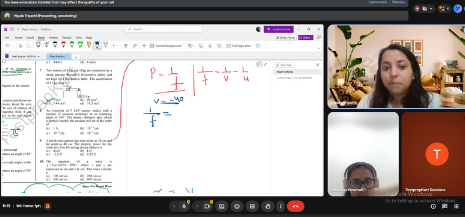


Why Booking a NEET Demo Class Is Important
A demo class provides firsthand exposure to:
- Teaching style
- Faculty clarity
- Student engagement
- Platform usability
- Content depth
For NRI students unfamiliar with Indian-style exam preparation, demo classes reveal whether the teaching approach suits their academic background.
Unlike U.S. classroom teaching, NEET coaching emphasizes:
- Rapid MCQ solving
- NCERT-focused explanations
- Time-bound learning
- Performance benchmarking
Parents should treat demo classes as academic trials, not promotional sessions.
Summary:
Demo classes help evaluate teaching compatibility before long-term commitment.
When Should NRI Families Book a Demo Class?
Timing matters.
Ideal stage to book demos:
- End of Grade 10
- Early Grade 11
- Before starting structured NEET preparation
Booking too late (e.g., during Grade 12) reduces flexibility for format experimentation.
Early demos allow families to:
- Compare teaching formats
- Choose batch vs 1:1 vs hybrid
- Align schedules with U.S. school workload
Example:
A Grade 10 student in Chicago attends two demo classes during summer before entering Grade 11.
Summary:
Book demos early, ideally before full preparation begins.
What to Observe During a Demo Class
Parents should observe beyond surface-level engagement.
Key evaluation points:
- Does the teacher explain concepts clearly?
- Is the explanation aligned with NCERT?
- Are MCQs solved systematically?
- Is time management emphasized?
- Is interaction encouraged?
Many demo sessions are simplified to impress students. Ask for exposure to real class content if possible.
Summary:
Evaluate clarity, structure, NCERT alignment, and exam focus.
Evaluating Faculty Quality
Faculty quality determines long-term learning outcomes.
During demo, assess:
- Depth of subject knowledge
- Clarity of explanations
- Ability to simplify complex concepts
- Responsiveness to doubts
For Physics and Organic Chemistry especially, conceptual clarity matters more than presentation style.
Parents should avoid being influenced solely by energetic delivery. Substance matters more than style.
Summary:
Faculty expertise and conceptual clarity are more important than presentation theatrics.
Live Demo vs Recorded Demo – What’s the Difference?
Live Demo
- Real-time teaching
- Interactive Q&A
- Exposure to peer environment
- Experience time zone feasibility
Live demos help NRI students understand scheduling practicality.
Recorded Demo
- Shows content quality
- Flexible viewing
- Demonstrates platform structure
However, recorded demos may not reveal real-time interaction quality.
Summary:
Live demos test engagement; recorded demos test content depth.
Questions Parents Should Ask After a Demo
After attending a demo class, parents should ask:
- Is the full syllabus covered systematically?
- How often are mock tests conducted?
- Is there rank benchmarking?
- How are doubts resolved?
- Are recordings available for revision?
- How does the platform accommodate U.S. time zones?
Clear answers indicate structured programs.
Summary:
Ask operational and academic questions, not just cost-related questions.
Red Flags During Demo Classes
Watch for:
- Over-promising guaranteed ranks
- Lack of structured syllabus roadmap
- No mock testing schedule
- Weak NCERT emphasis
- No student progress tracking
NEET is competitive. Programs promising unrealistic guarantees lack credibility.
Summary:
Avoid programs focused more on marketing than structured preparation.
Evaluating Platform and Technology
For online coaching, platform quality matters.
Assess:
- Video clarity
- Audio stability
- Access to recordings
- Mock test interface
- Performance analytics
Technical issues can disrupt learning consistency.
USA-based families must ensure smooth platform compatibility with local internet infrastructure.
Summary:
Reliable technology ensures uninterrupted learning.
Comparing Multiple Demo Classes
Attending 2–3 demo classes helps comparison.
Parents should compare:
- Faculty clarity
- Student engagement
- Test integration
- Schedule flexibility
- Cost-to-value ratio
Avoid attending too many demos, which may cause confusion.
Summary:
Compare 2–3 structured demos before deciding.
How Many Demo Classes Are Enough?
Generally, 2–3 demos are sufficient.
More than that may:
- Delay preparation
- Create indecision
- Confuse students
Once a suitable program is identified, early enrollment ensures smooth syllabus start.
Summary:
Evaluate, decide, and begin preparation early.
Demo Class as a Student Self-Assessment Tool
Demo classes also help students evaluate themselves.
Students should ask:
- Did I understand the teaching style?
- Could I follow the pace?
- Was I comfortable asking doubts?
- Did I feel motivated?
Personal comfort improves long-term consistency.
Summary:
Demo classes help assess both coaching and student readiness.
Financial Transparency During Demo Stage
Before committing, parents should clarify:
- Total course fee
- Mock test inclusion
- Study material cost
- Refund policy
- Upgrade options
Financial clarity prevents misunderstandings later.
Summary:
Understand full cost structure before enrollment.
Decision Framework After Demo
Ask these final questions:
- Does this format suit my child’s learning style?
- Is time zone manageable?
- Does the program emphasize NCERT?
- Are mock tests integrated?
- Does my child feel confident after the demo?
If most answers are positive, proceed.
Summary:
Choose program aligned with student personality and academic goals.
Final Takeaway for USA-Based NRI Families
Booking a NEET demo class is not a marketing formality — it is a critical academic evaluation step.
Parents should:
- Observe teaching clarity
- Evaluate syllabus structure
- Assess time zone practicality
- Confirm mock testing integration
- Ensure technological reliability
Choosing the right coaching format early significantly improves NEET preparation outcomes.
Demo classes provide clarity — but decision must follow structured evaluation.
Overall Summary
Demo classes allow USA-based NRI families to evaluate faculty quality, syllabus alignment, mock test structure, and time zone feasibility.
Live demos test engagement and schedule compatibility. Recorded demos show content depth.
Parents should attend 2–3 demos, ask structured questions, and avoid marketing-driven decisions.
Strategic evaluation before enrollment improves long-term NEET success probability.