




Hi, I’m TestprepKart.
Your Partner In Exam Preparation

Download Testprepkart SAT Prep Guide
The Ivy League is a group of eight highly selective, private universities located in the Northeastern United States. While the Ivy League originally started as an athletic conference, today the name is widely associated with elite academics, world-class faculty, deep research funding, and extremely competitive admissions.
Ivy League schools are known for strong outcomes in leadership, business, law, medicine, public service, and research. However, “Ivy League” does not automatically mean “best for everyone.” Each school has a different campus culture, academic structure, and student experience so the right fit depends on your goals, major, learning style, and environment preference.
| Name | Location | National University Ranking |
| Princeton University | Princeton, NJ | 1 |
| Harvard University | Cambridge, MA | 3 |
| Yale University | New Haven, CT | 5 |
| University of Pennsylvania | Philadelphia, PA | 6 |
| Brown University | Providence, RI | 9 |
| Columbia University | New York, NY | 12 |
| Cornell University | Ithaca, NY | 12 |
| Dartmouth College | Hanover, NH | 18 |
Note: Rankings vary slightly by year and publisher. Use rankings as a quick reference not the final decision-maker.

Explore the SAT Course Book a Free Trial Session

This Free Digital SAT Prep Guide gives you a clear roadmap for what to study first, how to practice smart, and how to improve timing without burnout. It includes priority topics, common mistake patterns, and a weekly plan that fits U.S. high school + AP workload. Download it to start preparing with a structured, score-focused strategy.
Download SAT Prep E-book Guide
If you’re aiming for an Ivy League–level score, your prep should be built around official-style questions, timed accuracy, and error-pattern tracking not random worksheets. The fastest improvements come from mastering:
Reading & Writing precision (eliminating “almost correct” choices)
Math speed + setup discipline (especially medium-to-hard questions)
Module timing strategy (avoiding last-minute rush errors)
A “good” SAT score for Ivy League colleges is typically one that sits at or above the middle-to-upper portion of admitted student ranges. But it’s important to understand how admissions teams view SAT scores:
1) SAT Score Is Important But Not Alone
Ivy League admissions consider multiple factors such as grades, course rigor, activities, essays, recommendations, leadership, and impact. Still, the SAT often acts as a strong academic signal, especially for competitive applicants.
2) Think in Percentiles, Not Just a Number
Most Ivy League schools publish SAT ranges like 25th percentile and 75th percentile:
25th percentile means 25% of admitted students scored below that number.
75th percentile means 75% scored below that number (top-range applicants).
3) Practical Benchmark (How to Interpret Your Score)
If your SAT score is below the 25th percentile, your application usually needs exceptional strength in other areas to stay competitive.
If your score is between the 25th and 75th percentile, you’re in a realistic competitive zone your essays and activities can become the differentiator.
If your score is at or above the 75th percentile, your SAT becomes a strength now your job is to prove fit, impact, and personality through the rest of the application.
For many U.S. high school students and NRI/OCI families following U.S. admissions timelines, the most effective plan is to target an SAT score that makes the academics “safe”, so the rest of the application can shine.
A perfect SAT score (or near-perfect) significantly improves your academic profile, but it does not guarantee admission.
Here’s why: Ivy League schools are not only selecting students who can score high they are selecting students who bring something meaningful to the campus community. This includes:
Strong academic record with challenging coursework
Consistent long-term extracurriculars (not just short-term “activities”)
Leadership and measurable impact
Essays that reflect maturity, clarity, and purpose
Recommendations that confirm character and classroom strength
A great SAT score can open doors, but admission still depends on whether your overall profile shows fit, depth, and impact.

About the Colleges:
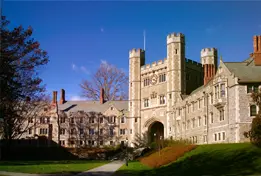
Princeton University, a venerable institution with over 270 years of history, holds the top spot in the National Universities ranking. Renowned for its research prowess, Princeton offers unparalleled academic resources including specialized libraries and cutting-edge laboratories. The Princeton University Art Museum houses an impressive collection of nearly 100,000 works. With a remarkable 4-to-1 student-faculty ratio, Princeton fosters intimate learning environments, enabling students to forge close relationships with professors. Its prestigious alumni list boasts U.S. presidents, Nobel Prize winners, and Olympic medalists.
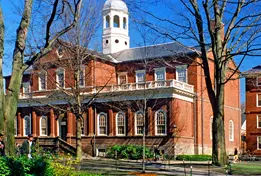
Harvard University, established in 1636, stands as the oldest higher education institution in the U.S. Tied for second place in the National Universities ranking, Harvard maintains its position as one of the most selective Ivy League schools. The university’s vast campus hosts over 100 research centers, including the nation’s top-ranked medical school and esteemed graduate schools in business, engineering, and law. Harvard’s commitment to sustainability is evident through its green living programs, while its extensive library system houses the oldest national collection worldwide.
Yale University, renowned for its distinguished drama and music programs, is home to the prestigious Yale School of Drama. Alongside Yale College and the Graduate School of Arts and Sciences, the university boasts 12 professional schools, including the nation’s top-ranked law school. Undergraduate students at Yale engage in groundbreaking research across various fields, from biology to history. The university offers abundant global learning opportunities, encouraging students to explore international internships and directed research.
The University of Pennsylvania, founded by Benjamin Franklin, blends world-class liberal arts education with preprofessional training. With the highest number of international students among Ivy League schools, Penn fosters a diverse and inclusive campus community. Its renowned graduate schools, including the Wharton School and the Perelman School of Medicine, offer top-tier education in business and healthcare. Penn’s commitment to experiential learning is evident through its extensive network of student organizations and international study programs.
Brown University, known for its innovative open curriculum, empowers students to pursue interdisciplinary studies. With over 80 concentrations available, including unique fields like cognitive neuroscience and Egyptology, Brown encourages intellectual exploration. The university’s liberal medical education program allows students to earn both undergraduate and medical degrees in an accelerated timeframe. Brown’s rich academic environment is complemented by a vibrant campus life, with over 500 student clubs and organizations fostering a dynamic community.
Columbia University, situated in the heart of Manhattan, boasts a legacy of pioneering achievements in technology, literature, and advocacy. As the oldest institution of higher education in New York State, Columbia offers a diverse array of undergraduate programs through its three schools. Its esteemed graduate schools, including the business and law schools, attract students from around the globe. Columbia’s emphasis on research and global engagement is supported by its extensive network of research institutes and global centers.
Cornell University, the youngest member of the Ivy League, upholds a commitment to inquiry and discovery across its seven undergraduate colleges and schools. From arts and sciences to veterinary medicine, Cornell offers over 100 fields of study, providing students with a breadth of academic opportunities. The university’s global footprint extends to campuses in New York City, Qatar, and Rome, fostering a diverse and international learning environment. With a focus on innovation and collaboration, Cornell continues to push the boundaries of knowledge and excellence.
Dartmouth College, known for its pioneering contributions to computing and Native American programs, offers a transformative educational experience. Home to the Tuck School of Business and Thayer School of Engineering, Dartmouth prepares students for leadership roles in various fields. The college’s intimate learning environment, characterized by a low student-faculty ratio, fosters close mentorship and collaboration. Dartmouth’s commitment to experiential learning is evident through its extensive off-campus programs and research-focused initiatives.
.webp)
| SAT Math Test Prep | SAT English Test Prep |
| Best SAT Prep Books | Official SAT Study Guide |
| Barron’s SAT Study Guide | Digital SAT Practice Tests |
| Universities That accept Sat Score | SAT Prep Online |

He is a Digital SAT mentor with 10+ years of experience, working primarily with SAT students all Over worldwide. Their students have consistently progressed toward 1520+ scores by improving timing, accuracy, and trap-answer control through official-style practice, detailed mistake analysis, and clear weekly action plans.
Copyright © 2024 CounselKart Educational Services Pvt. Ltd.. All Rights Reserved


Post a Comment