




Hi, I’m TestprepKart.
Your Partner In Exam Preparation

Download Testprepkart SAT Prep Guide
Ivy League schools are among the most prestigious and selective universities in the United States. They are known for academic excellence, world-class faculty, groundbreaking research, and alumni that include CEOs, Nobel Prize winners, Supreme Court justices, founders, and global leaders.
Admission to an Ivy League school is extremely competitive. However, while every Ivy is highly selective, acceptance rates and admissions dynamics vary slightly from school to school.
This guide explains:
What the Ivy League actually is
Updated acceptance rate comparisons
Which Ivies are statistically “less selective” (relatively speaking)
What Ivy admissions committees really evaluate
How students can strengthen their applications

Explore the SAT Course Book a Free Trial Session

The biggest challenge in SAT prep isn’t effort-it’s direction. This free SAT Prep Guide gives students a clear, structured roadmap for the Digital SAT. It explains priority topics, effective practice methods, timing strategies, and common mistakes that impact scores. Designed for U.S. high school students and Indian NRI families following U.S. admission timelines, this guide helps students prepare efficiently while balancing schoolwork and AP coursework.
Download SAT Prep E-book Guide
The Ivy League is a group of eight private universities in the Northeastern United States. The league was formally established in 1954 as an athletic conference, but the institutions themselves are much older.
Harvard University – Cambridge, Massachusetts
Yale University – New Haven, Connecticut
Princeton University – Princeton, New Jersey
Columbia University – New York, New York
University of Pennsylvania (UPenn) – Philadelphia, Pennsylvania
Brown University – Providence, Rhode Island
Dartmouth College – Hanover, New Hampshire
Cornell University – Ithaca, New York
Today, the term “Ivy League” is synonymous with academic prestige and elite admissions.
| School | Approx. Acceptance Rate | Undergraduate Enrollment |
| Harvard University | 3–4% | 6,700 |
| Columbia University | 4% | 9,000 |
| Princeton University | 4–5% | 5,300 |
| Yale University | 4–5% | 6,000 |
| Brown University | 5–6% | 6,700 |
| University of Pennsylvania | 5–6% | 6,300 |
| Dartmouth College | 6–7% | 4,400 |
| Cornell University | 7–9% | 15,000 |
Get Exam Prep Help Connect With SAT advisor
It’s the dream of numerous high school students who want to get admission into an Ivy League school.
But sadly, it’s a well-known fact that it isn’t so easy to get acknowledged into these highly respected schools in the US.
While the facts really confirm that getting into the Ivies is troublesome, but it’s simpler to get admitted into some of them.
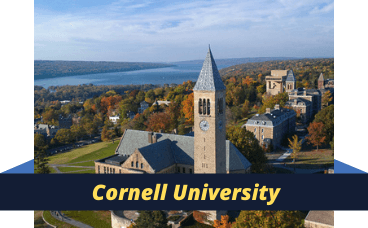
Acceptance rate: 10.6%
Undergraduate enrollment: 15,043
It was founded way back in 1865.
It is the easiest Ivy to get admission into because of its acceptance rate.
It has more than 4,000 courses.
This means a student will easily find a subject of interest to study.
The students need to apply directly to any one of its eight undergraduate colleges.
Mentioned below are the acceptance rates for its eight undergraduate colleges:
College of Agriculture and Life Sciences: 11.38%
College of Architecture-Art and Planning: 10.25%
College of Arts and Science: 9.87%
Cornell SC Johnson College of Business: 6.4%
College of Engineering: 10.53%
Cornell’s School of Hotel Administration: 24.17%
College of Human Ecology: 18.34%
School of Industrial and Labor Relations (ILR): 15.89%
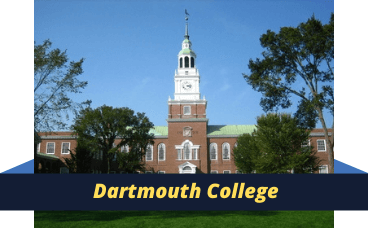
Acceptance rate: 7.9%
Undergraduate enrollment: 4,417
This is the second-easiest Ivy League school where you can get admission into.
It was established in 1769.
It is the smallest Ivy League school.
Known for its amazing faculty along with superb research opportunities, Dartmouth College is extremely sought after amongst students with a research bent of mind.
It has the largest outing club and offers outstanding opportunities to students to explore as well as enjoy the gorgeous looking natural landscape that surrounds the campus of the school.

Acceptance rate: 7.7%
Undergraduate enrollment: 6,311
It was set up in 1740 and is known for its wonderful courses in arts and humanities.
It is as a matter of fact home to the first collegiate business school in the world i.e. the Wharton School.
It also has the oldest medical school in the United States.
There are four schools under the ambit of the University of Pennsylvania namely, the School of Nursing, the College of Arts and Sciences, Penn Engineering, and the Wharton School of Business.
So, students apply for any of them.
They can even apply for a dual degree program if they want but for that, they need to be accepted by both the schools that they select.

Admission to all Ivies requires a lot of hard work and good grades.
So, you need to have a brilliant GPA if you need to fulfill your dream of getting into an Ivy League College.
There is no minimum GPA stated but the higher GPA will automatically enhance your chances of getting selected.
Many give importance to Academic Index in their selection process.
AI is a calculation of the overall academic performance of a student encompassing factors such as SAT or ACT score, GPA, and SAT Subject Test scores.
Another thing that is needed apart from good academic performance is extracurriculars.
Exceptional extracurricular amplify your chances of being selected.
They demonstrate the true personality and skill of a student and therefore they are given a lot of short shrifts.
Q1: What are the Ivy League colleges?
A1: The Ivy League is a group of eight private colleges and universities in the United States known for their academic excellence and rich history. The members are Brown University, Columbia University, Cornell University, Dartmouth College, Harvard University, the University of Pennsylvania, Princeton University, and Yale University.
Q2: Is there an “easiest” Ivy League college to get into?
A2: Admissions criteria vary among Ivy League schools, and none of them can be definitively labeled as the easiest to get into. Each institution has its own unique admissions process, and acceptance rates fluctuate from year to year.
Q3: What factors influence admission to Ivy League colleges?
A3: Ivy League colleges consider various factors, including academic achievements, standardized test scores (SAT or ACT), extracurricular activities, letters of recommendation, personal essays, and interviews. While academic excellence is crucial, a holistic approach is taken to evaluate applicants.
Q4: Are there Ivy League colleges with higher acceptance rates?
A4: Historically, some Ivy League colleges have had slightly higher acceptance rates than others, but these rates are still very low compared to other universities. Acceptance rates can change from year to year, and it’s essential to check the latest data for accurate information.
Q5: How can I improve my chances of getting into an Ivy League college?
A5: Focus on academic excellence, participate in meaningful extracurricular activities, demonstrate leadership skills, seek out unique opportunities, and showcase your personality through well-crafted essays. Additionally, strong letters of recommendation and a compelling personal story can positively impact your application.
Q6: Should I apply to multiple Ivy League colleges to increase my chances?
A6: It’s common for students to apply to multiple Ivy League colleges due to the competitive nature of admissions. However, it’s crucial to choose schools that align with your academic and personal interests rather than solely aiming for higher acceptance rates.
Q7: Are there alternative universities with strong programs that are less competitive than the Ivy League?
A7: There are many excellent universities outside the Ivy League with strong academic programs. Consider researching and applying to a diverse range of schools that match your academic and personal preferences.
Q8: What resources can I use to research Ivy League admissions?
A8: Each Ivy League university has an official admissions website with detailed information on their requirements, processes, and statistics. Additionally, you can explore college admissions guides, forums, and consult with high school counselors for guidance.
Q9:Do legacy applicants have an advantage in Ivy League admissions?
A9: While some Ivy League schools consider legacy status, it alone is not a guarantee of admission. Legacy applicants are still held to high academic and personal standards.
Q10: Are there any Ivy League schools with more relaxed admissions for international students?
A10: Ivy League schools have a global applicant pool, and standards for international students are as high as for domestic applicants. Admissions decisions are based on merit, not nationality.

He is a Digital SAT mentor with 10+ years of experience, working primarily with SAT students all Over worldwide. Their students have consistently progressed toward 1520+ scores by improving timing, accuracy, and trap-answer control through official-style practice, detailed mistake analysis, and clear weekly action plans.
Copyright © 2024 CounselKart Educational Services Pvt. Ltd.. All Rights Reserved



Post a Comment