


Hi, I’m TestprepKart.
Your Partner In Exam Preparation
Choosing between studying medicine in India or the United States is one of the biggest decisions for aspiring doctors, particularly for NRI and international students. Both countries offer strong medical education systems but differ in duration, costs, admission process, quality of training, global recognition, and career pathways.
In India, the MBBS pathway is shorter and often more affordable, with excellent patient exposure but intense competition for government seats. In the United States, the journey is longer and more expensive, but it provides advanced facilities, structured training, and a qualification that is globally respected.
The decision ultimately depends on budget, long-term career goals, family preferences, and the country where you plan to practice medicine in the future.
| Aspect | India | USA |
| Course Duration | MBBS: 5.5 years (includes 1-year internship) | Pre-med 3–4 yrs + MD/DO 4 yrs + Residency 3–7 yrs |
| Total Cost | Govt: $1k–$2k/yr Private: $20k–$60k/yr NRI Quota: $25k–$60k/yr | Undergrad: $20k–$60k/yr Med School: $30k–$70k/yr Overall: $250k–$600k+ |
| Getting Admission | NEET is required, competition is high, government seats are few, but NRI quota seats are available in private and deemed colleges. | MCAT + high GPA needed; focus on research & activities; very few seats for international students; visa needed |
| Quality of Training | Good patient exposure, but depends on college & funding | High-tech hospitals, structured training, strong research opportunities |
| Recognition | MBBS is accepted, but needs extra exams abroad (FMGE, USMLE, PLAB) | US degrees (MD/DO) are highly valued; still need country-specific licenses |
| Scholarships | Limited; some colleges & govt schemes for Indians and NRIs | More options; need-based, merit-based, assistantships, external funding |
| Licensing Exams | NEET-PG/NExT for specialization; FMGE for foreign graduates | USMLE Steps 1–3 + residency + state licensing exams |

The choice between pursuing medicine in India or the United States often hinges on timelines, financial capacity, family preferences, and long-term career goals. In India, the pathway is shorter in duration and often more affordable upfront, especially in public institutions. In the United States, despite higher upfront costs and longer training timelines, the potential for international mobility, research opportunities, and a globally recognized residency framework can be compelling.
The MBBS program in India is designed as a single degree course
Standard pathway remains MBBS + internship for all students.
Some institutes may offer integrated or early specialization tracks.
Some institutes run integrated programs or offer early specialization tracks, but the core pathway remains the MBBS plus internship. For NRIs aiming to practice in India or use India as a springboard for other destinations, understanding the state-specific registration and continued medical education (CME) expectations is essential.
In practice, many NRIs plan for a total timeline of roughly 11–15+ years from the start of pre-med coursework to board-certified physician, depending on specialty and subspecialty choices. This extended pathway reflects high standards of clinical training, patient safety, and the breadth of opportunities available in the U.S. system.
The total varies by city, college type, and lifestyle.
A full MBBS program in India, including tuition + living, typically costs around $40,000 – $150,000 (USD equivalent).
Costs vary widely by institution, location, and lifestyle.
A full U.S. medical pathway (pre-med + med school + living costs) typically ranges from $250,000 to $600,000+.
Students should always verify latest availability and rules for the targeted state or institution.
Some pursue back-up options like post-baccalaureate or special master’s programs to strengthen applications.
Applicants may consider Osteopathic (DO) programs alongside Allopathic (MD) routes.
The quality of medical education in India varies significantly depending on the institution and its location. Top government and private universities generally provide excellent clinical training with exposure to a large patient base, along with opportunities for research and global collaborations.
These institutions usually benefit from stronger faculty availability and better infrastructure. In contrast, smaller or rural colleges may struggle with limited facilities, fewer resources, and reduced faculty strength, which can impact the overall learning experience. As a result, students at premier institutions and major hospitals often receive outstanding hands-on training, while others may face certain gaps depending on the resources available at their colleges.
Medical education in the United States is built on a nationally standardized curriculum across accredited schools, ensuring a balanced focus on basic sciences, clinical training, and professional skill development. Students benefit from broad clinical exposure in both hospitals and community healthcare settings, with a strong emphasis on hands-on patient care and patient safety.
The residency system is well-established and highly structured, offering intensive training across specialties under close supervision. Overall, the U.S. system maintains consistently high standards, supported by advanced infrastructure, modern technology, and a culture that promotes teamwork, research, and inter-professional collaboration.
In India, scholarships for medical students are offered by both government and private institutions. These can be merit-based (for strong academic performance) or need-based (for families with limited income). Some medical colleges also run their own scholarship schemes.
For NRI students, a few private colleges and certain government schemes may provide limited support, but availability changes every year. Students should always check directly with the college and also explore external options like foundations or community organizations.
Financial aid for international students, including NRIs, is more limited than for U.S. citizens. Some medical schools provide need-based or merit-based scholarships, but these vary by institution. Students can also apply for external scholarships from private foundations or global organizations.
Since costs are high, many NRIs depend on private loans (often needing a U.S. co-signer) or, in some cases, research/teaching assistantships that reduce expenses. Careful financial planning and exploring multiple funding sources are essential before applying.
Following MBBS and internship, graduates register with state medical councils to practice. Specialization options include MD/MS, DM/MCh, and PhD tracks. For NRIs, there may be opportunities to practice in India or pursue international pathways after completing Indian training, though licensure requirements change by country.
In the U.S. system, graduates typically enter residency after medical school, followed by board certification and, often, fellowships. The pathway offers broad mobility and opportunities across primary care, specialty medicine, and research. NRIs may pursue opportunities in U.S. hospitals, academic centers, and private practice while meeting visa requirements. The long-term career trajectory often includes leadership roles, clinical innovation, and potential academic appointments.
Indian medical degrees enjoy broad recognition, particularly in Commonwealth countries and the Middle East, but licensing and credential evaluation continue to be country-specific. For the United States, Foreign Medical Graduates must clear the ECFMG pathway and complete residency to practice. U.S.-trained physicians often enjoy strong global reputations and portability, though licensing barriers can vary by region.
US-trained physicians have a robust global footprint, with many graduates pursuing opportunities internationally. The combination of residency training, board certification, and ongoing CME contributes to strong international credibility.
After MBBS and internship, graduates generally register with a State Medical Council. Foreign graduates who wish to practice in India must pass the FMGE (Foreign Medical Graduates Examination) to obtain licensure to practice in India. Licensure and practice standards can vary by state and require ongoing CME. Internships and post-graduate training impact eligibility for specific licensure tracks.
International medical graduates pursue ECFMG certification, pass the United States Medical Licensing Examination (USMLE) Steps 1, 2 CK, and 3, secure a residency position, and obtain state licensure. Board certification is specialty-specific and often pursued after residency. The process is complex and highly merit-based, with visa status playing a continuing role.
One of the most striking differences between pursuing medicine in India versus the USA is the earning potential.
Fresh MBBS graduates typically start with salaries ranging from ₹4 to 7.5 lakh per year. With experience and specialization, earnings can grow substantially specialists may earn anywhere from ₹9 lakh to ₹30 lakh per annum or more. Salaries also vary by location and institution, with metro cities and top hospitals offering higher compensation.
U.S. physicians enjoy significantly higher income levels. The median salary for physicians and surgeons was about $239,200 per year in 2024. On average, physicians now earn around $350,000 annually, and specialists especially in high-demand fields can earn upwards of $400,000 or more.
| Step | Description |
|---|---|
| Define goals and constraints | Clarify timelines, budget, visa considerations, family support, and preferred countries for training and practice. |
| Compare program structures | Assess duration, curriculum, clinical exposure, and licensing prerequisites in India vs the USA. |
| Assess costs and aid | Estimate tuition, living costs, insurance, and available scholarships or financial aid in both systems. |
| Plan timeline and admissions strategy | Plan exams, applications, and visa steps to match your career goals. |
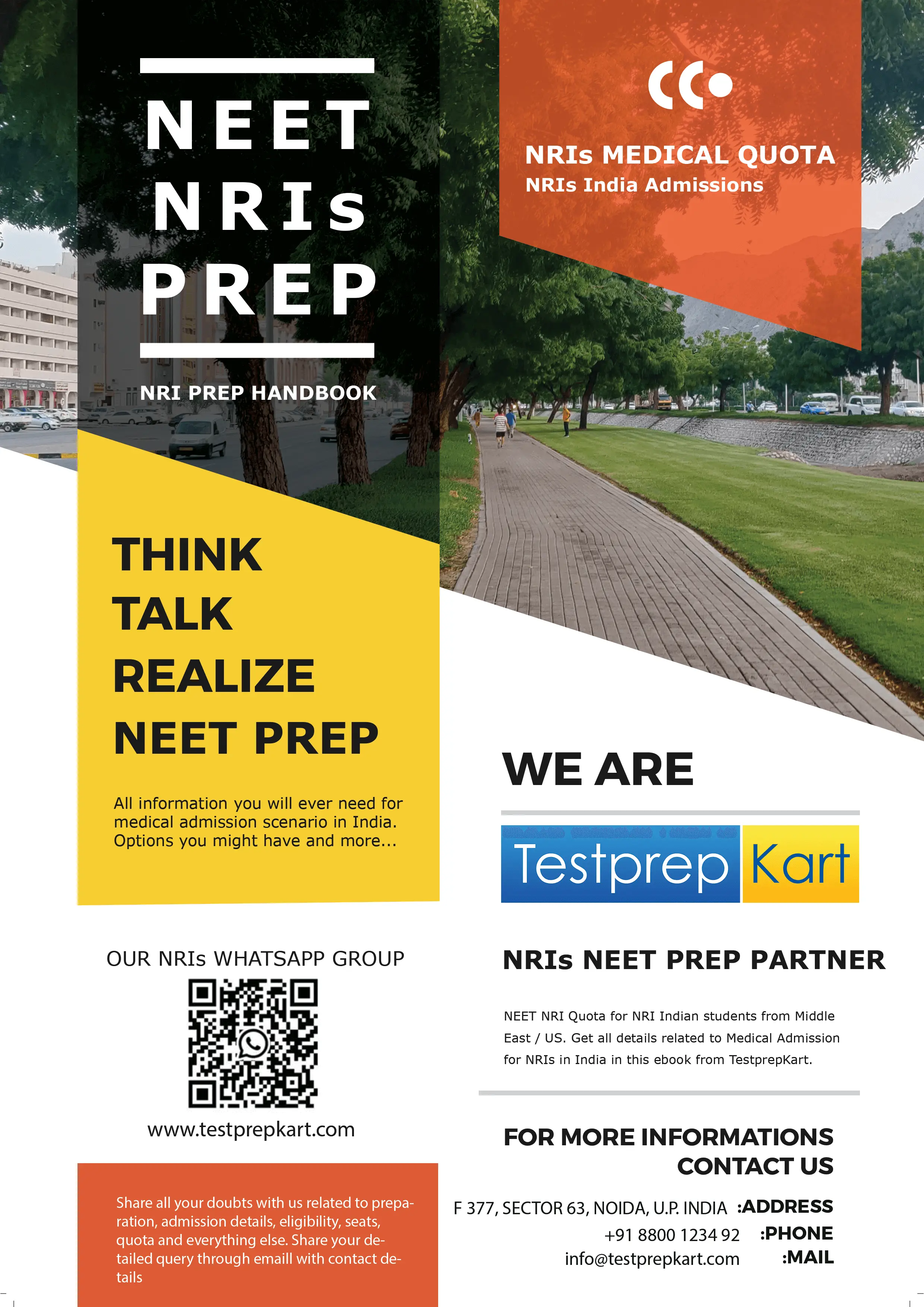
NEET NRI Preparation eBook is specially designed to the NRI Students. It helps answer more questions related to the NRI quota, preparation tips and more. Click the button below to download.

1. What is the main difference between studying medicine in India and the USA?
In India, students can enter directly after Grade 12 through NEET, while in the USA students first complete a pre-med bachelor’s degree before entering medical school.
2. Which option is more affordable: India or USA?
India is generally more affordable, especially in government colleges, while the USA has much higher overall costs due to undergraduate + medical school fees.
3. Is it easier to get admission in India or the USA?
Both are highly competitive. In India, NEET scores decide admission, while in the USA admission depends on MCAT, GPA, research, and other factors.
4. Which degree is more globally recognized: MBBS in India or MD/DO in the USA?
Both are recognized, but U.S. medical degrees (MD/DO) usually enjoy stronger global recognition and easier international mobility.
5. What should NRIs consider before choosing India or the USA?
NRIs should weigh costs, admission opportunities (like NRI quota seats in India), visa requirements in the USA, and long-term career goals about where they plan to practice.







Copyright © 2024 CounselKart Educational Services Pvt. Ltd.. All Rights Reserved


Post a Comment