


Hi, I’m TestprepKart.
Your Partner In Exam Preparation
Recently, NTA released the NEET 2026 syllabus on its official website for Physics, Chemistry, and Biology subjects and we have divided the syllabus subject-wise. In this article, we discuss the NEET 2026 Physics syllabus, including its important units and chapters, important topics, chapter-wise weightage, and difficulty-wise (hardest to easiest) important topics.
| Subject | Resource |
| Physics | Download Now |
This section covers the important units and chapters from Class 11 and 12 as per the NEET Physics 2026 syllabus, helping aspirants focus on the most important and high-weightage units/chapters for the exam.
The Class 11 Physics syllabus for NEET 2026 includes 10 units and about 14 chapters, covering all the key concepts students need to prepare effectively.
| Class 11 Units | Chapters |
| Physical World and Measurement | Units and Measurements |
| Kinematics | Motion in a Straight LineMotion in a Plane |
| Laws of Motion | Laws of Motion |
| Work, Energy and Power | Work, Energy and Power |
| Motion of System of Particles and Rigid Body | System of Particles and Rotational Motion |
| Gravitation | Gravitation |
| Properties of Bulk Matter | Mechanical Properties of SolidsMechanical Properties of FluidsThermal Properties of Matter |
| Thermodynamics | Thermodynamics |
| Behaviour of Perfect Gas and Kinetic Theory of Gases | Kinetic Theory |
| Oscillations and Waves | OscillationsWaves |
The Class 12 Physics syllabus for NEET 2026 consists of 10 units and around 14 chapters, covering all the essential concepts students need to master for effective preparation.
| Class 12 Units | Chapters |
| Electrostatics | Electric Charges and Fields |
| Electrostatic Potential and Capacitance | |
| Current Electricity | Current Electricity |
| Magnetic Effects of Current and Magnetism | Moving Charges and Magnetism |
| Magnetism and Matter | |
| Electromagnetic Induction and Alternating Currents | Electromagnetic Induction |
| Alternating Current | |
| Electromagnetic Waves | Electromagnetic Waves |
| Optics | Ray Optics and Optical Instruments |
| Wave Optics | |
| Dual Nature of Radiation and Matter | Dual Nature of Radiation and Matter |
| Atoms and Nuclei | Atoms |
| Nuclei | |
| Electronic Devices | Semiconductor Electronics – Materials, Devices and Simple Circuits |
Based on the NEET 2026 Physics syllabus, the following are the most important topics from Class 11 and Class 12 that students should focus on during their preparation.
Here are the important topics from Class 11 Physics as per the NEET 2026 syllabus. These topics form the foundation for many advanced concepts in Class 12 and carry significant weight in the NEET exam.
| Units / Topics (Class 11) | Topics Covered |
| Physical World & Measurement | • Physics – scope and excitement • Nature of physical laws • Units of measurement • SI units • Dimensional analysis • Accuracy and errors in measurement • Significant figures • Measuring instruments – vernier callipers, screw gauge • Use of dimensional analysis for checking equations |
| Kinematics | • Frame of reference • Motion in a straight line – position, path length, displacement, speed, velocity, acceleration • Graphs of motion • Motion in two dimensions – projectile motion, uniform circular motion • Relative velocity |
| Laws of Motion | • Newton’s laws of motion • Inertia, momentum, impulse • Law of conservation of momentum • Friction – types and laws • Circular motion • Equilibrium of forces • Motion of connected bodies (pulleys) |
| Work, Energy & Power | • Work done by constant and variable force • Kinetic and potential energy • Work-energy theorem • Power • Conservative and non-conservative forces • Potential energy of a spring • Conservation of mechanical energy |
| Motion of System of Particles & Rigid Body | • Centre of mass and its motion • Conservation of momentum • Rotational motion • Torque and angular momentum • Moment of inertia and radius of gyration • Theorems of parallel and perpendicular axes • Equilibrium of rigid bodies |
| Gravitation | • Universal law of gravitation • Acceleration due to gravity and its variation • Gravitational potential and potential energy • Escape and orbital velocity • Satellite motion • Kepler’s laws of planetary motion |
| Properties of Bulk Matter | • Elasticity – stress and strain, Hooke’s law • Pressure in fluids, Pascal’s law and applications • Viscosity and Stoke’s law • Surface tension and capillarity • Fluid dynamics and Bernoulli’s theorem • Heat transfer and conduction |
| Thermodynamics | • Thermal equilibrium and temperature • Zeroth law of thermodynamics • First law – internal energy and heat transfer • Specific heat capacity • Isothermal and adiabatic processes • Second law of thermodynamics • Carnot engine and efficiency |
| Behaviour of Perfect Gas & Kinetic Theory | • Equation of state PV = nRT • Work done during expansion and compression • Kinetic interpretation of temperature • Degrees of freedom • Mean free path • Avogadro’s law • Root mean square speed and gas pressure |
The Class 12 Physics syllabus for NEET 2026 covers many crucial concepts that directly appear in the exam. Below are the most important topics from Class 12 Physics that every NEET aspirant should master for a strong performance.
| Units / Topics (Class 12) | Topics Covered |
| Electrostatics | • Electric charges and their conservation • Coulomb’s law • Electric field and field lines • Electric flux and Gauss’s theorem • Electric potential and potential energy • Conductors and insulators • Dielectrics and capacitors • Combination of capacitors and energy stored in a capacitor |
| Current Electricity | • Electric current and drift of electrons • Ohm’s law and electrical resistance • Electrical resistivity and conductivity • Combination of resistors • Temperature dependence of resistance • Electric power and energy • Kirchhoff’s laws and their applications • Wheatstone bridge and meter bridge |
| Magnetic Effects of Current & Magnetism | • Biot-Savart law and magnetic field due to current • Ampere’s circuital law . • Force on a moving charge and current-carrying conductor • Torque on a current loop • Magnetic dipole and bar magnet • Earth’s magnetism • Moving coil galvanometer |
| Electromagnetic Induction & Alternating Currents | • Faraday’s laws of electromagnetic induction • Lenz’s law and induced emf • Eddy currents, self and mutual induction • AC generator • LC oscillations • LCR series circuit and resonance • Power in AC circuits and power factor |
| Electromagnetic Waves | • Need for displacement current • Maxwell’s equations (basic idea) • Electromagnetic spectrum • Applications of electromagnetic waves – radio, microwaves, IR, UV, X-rays, gamma rays |
| Optics | • Reflection and refraction of light • Mirror and lens formulae • Total internal reflection • Refraction through a prism • Optical instruments – microscope and astronomical telescope • Interference, diffraction and polarization |
| Dual Nature of Matter & Radiation | • Photoelectric effect and Einstein’s equation • Wave-particle duality • de Broglie wavelength • Davisson-Germer experiment |
| Atoms & Nuclei | • Rutherford’s and Bohr’s atomic models • Energy levels and hydrogen spectrum • Radioactivity – alpha, beta, gamma decay • Mass-energy equivalence • Binding energy per nucleon and nuclear fission/fusion |
| Electronic Devices | • Semiconductor materials – intrinsic and extrinsic • pn junction diode and Zener diode • Transistor as amplifier and switch • Logic gates – AND, OR, NOT, NAND, NOR • Basics of digital electronics |
| Communication Systems | • Elements of communication system • Modulation and demodulation • Bandwidth of signals • Propagation of radio waves • Satellite and optical fiber communication |
In the NEET 2026 Physics syllabus, several new topics and clarifications have been added to make the content more precise and concept-focused. Here are the key additions and updates introduced this year.
| Physics | • Practical & experimental skills (vernier calliper, screw gauge, calorimeter) • Error analysis and significant figures clarified under Physical World & Measurement • Two-dimensional and non-uniform circular motion questions highlighted • Elastic & inelastic collisions examples added to Laws of Motion • Satellite motion & escape velocity formulae explicitly listed under Gravitation • Deeper coverage of q, w, ΔU, ΔH in Thermodynamics • RMS speed & mean free path calculations in Kinetic Theory • Logic gates and semiconductor examples expanded in Electronics |
In the updated NEET 2026 Physics syllabus, a few topics from the 2025 version have been deleted or reduced. These removals are aimed at reducing extra burden on students and keeping the syllabus concise and concept-oriented.
| Physics | • Rolling motion and related problems under Laws of Motion • Reynolds number, Poiseuille’s law, shear modulus, Poisson’s ratio (from Properties of Bulk Matter) • Heat engines and refrigerators (from Thermodynamics) • Damped and forced oscillations, Doppler effect (from Oscillations & Waves) • Van de Graaff generator (from Electrostatics) • Transistor biasing circuits and deep semiconductor theory (kept only basics) • Long derivations in Kinematics (vector calculus, differentiation/integration) |
In NEET 2026, the Physics section comprises 45 questions worth 180 marks. The following chapter-wise weightage gives students a clear idea of the key chapters and those with the highest probability of questions in the exam.
| Class | Chapter (from NCERT) | Approx. No. of Questions |
| Class 11 | Units and Measurements | 1 |
| Class 11 | Motion in a Straight Line | 1 – 2 |
| Class 11 | Motion in a Plane | 1 |
| Class 11 | Laws of Motion | 2 – 3 |
| Class 11 | Work, Energy and Power | 2 |
| Class 11 | System of Particles and Rotational Motion | 2 – 3 |
| Class 11 | Gravitation | 1 – 2 |
| Class 11 | Mechanical Properties of Solids | 1 |
| Class 11 | Mechanical Properties of Fluids | 1 |
| Class 11 | Thermal Properties of Matter | 1 |
| Class 11 | Thermodynamics | 2 |
| Class 11 | Kinetic Theory | 1 |
| Class 11 | Oscillations | 1 – 2 |
| Class 11 | Waves | 1 – 2 |
| Class 12 | Electric Charges and Fields | 1 |
| Class 12 | Electrostatic Potential and Capacitance | 1 – 2 |
| Class 12 | Current Electricity | 3 |
| Class 12 | Moving Charges and Magnetism | 2 |
| Class 12 | Magnetism and Matter | 1 – 2 |
| Class 12 | Electromagnetic Induction | 2 |
| Class 12 | Alternating Current | 1 – 2 |
| Class 12 | Electromagnetic Waves | 1 |
| Class 12 | Ray Optics and Optical Instruments | 2 |
| Class 12 | Wave Optics | 1 – 2 |
| Class 12 | Dual Nature of Radiation and Matter | 2 |
| Class 12 | Atoms | 1 |
| Class 12 | Nuclei | 1 – 2 |
| Class 12 | Semiconductor Electronics – Materials, Devices and Simple Circuits | 1 – 2 |
These are the toughest and most challenging topics in the NEET 2026 Physics syllabus. Students need to understand the concepts deeply and practice a lot of numerical questions, as problems from these chapters are often tricky and multi-step.
| Class / Unit | Topics |
| Class 11 – Laws of Motion | Newton’s laws of motion Inertia, momentum impulseLaw of conservation of momentum Friction (types and laws), Circular motion Equilibrium of forces Motion of connected bodies (pulleys) |
| Class 11 – Work, Energy & Power | Work done by constant & variable forceKinetic & potential energy Work-energy theorem Power Conservative & non-conservative forces Potential energy of a spring Conservation of mechanical energy |
| Class 11 – Motion of System of Particles & Rigid Body | Centre of mass Conservation of momentum Rotational motion TorqueAngular momentum Moment of inertia Theorems of parallel & perpendicular axesEquilibrium of rigid bodies |
| Class 11 – Thermodynamics | Thermal equilibrium Zeroth law First law of thermodynamics Internal energy Specific heat capacityIsothermal & adiabatic processes Second law Carnot engine & efficiency |
| Class 12 – Current Electricity | Drift of electrons Ohm’s law Resistivity & conductivity Kirchhoff’s laws Wheatstone bridge Meter bridge Power & energy Temperature dependence of resistance |
| Class 12 – Magnetic Effects of Current & Magnetism | Biot–Savart lawAmpere’s circuital law Force on moving charge Torque on current loop Magnetic dipole Earth’s magnetism Moving coil galvanometer |
| Class 12 – Alternating Current (Part of EMI & AC) | LC oscillations LCR series circuitResonance Power factor RMS values AC generator |
| Class 12 – Wave Optics (Part of Optics) | Interference Diffraction Polarization Young’s double slit experiment |
| Class 12 – Atoms & Nuclei | Bohr’s model Energy levels Hydrogen spectrum Radioactivity (α, β, γ decay) Binding energy Nuclear fission & fusion |
These are moderately difficult topics in the NEET 2026 Physics syllabus. They require concept clarity, consistent practice, and problem-solving speed. With regular revision, these chapters can help you secure strong marks.
| Class/Unit | Topics |
| Class 11 – Kinematics | Motion in straight line Displacement Velocity Acceleration Graphs of motion Projectile motion Uniform circular motion Relative velocity |
| Class 11 – Gravitation | Universal law of gravitation Acceleration due to gravity Gravitational potentialEscape & orbital velocity Satellite motion Kepler’s laws |
| Class 11 – Properties of Bulk Matter | Elasticity (stress & strain) Pascal’s law Viscosity & Stoke’s law Surface tensionCapillarity Bernoulli’s theorem Heat transfer & conduction |
| Class 11 – Thermal Properties of Matter | Expansion Specific heat Calorimetry Heat conduction |
| Class 12 – Electrostatics | Electric charges & fields Coulomb’s law Gauss’s theorem Electric potential Conductors & insulators, Dielectrics Capacitance & energy stored |
| Class 12 – Electromagnetic Induction | Faraday’s lawsLenz’s law Self & mutual inductionEddy currents AC generator |
| Class 12 – Ray Optics & Optical Instruments | Reflection, Refraction Total internal reflection Lens/mirror formulae Optical instruments (microscope & telescope) |
| Class 12 – Dual Nature of Radiation & Matter | Photoelectric effectEinstein’s equation Wave-particle duality de Broglie wavelength Davisson-Germer experiment |
These are the easiest and most scoring topics in the NEET 2026 Physics syllabus. They are conceptually simple, less numerical, and often repeated in exams. With basic understanding and quick revision, you can easily secure marks from these chapters.
| Class / Unit | Topics |
| Class 11 – Physical World & Measurement | Physics scope Nature of physical laws Units & measurements Dimensional analysis Significant figures Errors in measurement Vernier calliper & screw gauge |
| Class 11 – Behaviour of Perfect Gas & Kinetic Theory | Equation of state PV = nRT Work done in expansion Kinetic interpretation of temperature Mean free path RMS speed Avogadro’s law |
| Class 11 – Oscillations & Waves | SHM, Frequency Phase Resonance Beats Standing waves Wave motion |
| Class 12 – Electromagnetic Waves | Displacement current Maxwell’s equations (basic idea) EM spectrum Applications (radio, microwaves, IR, UV, X-rays, gamma rays) |
| Class 12 – Electronic Devices | Semiconductor materials pn junction diode Zener diode Transistor as amplifier & switch Logic gates (AND, OR, NOT, NAND, NOR) |
| Class 12 – Communication Systems | Elements of communication Modulation/demodulation Bandwidth of signalsPropagation of waves Satellite & optical fibre communication |
The best physics books are crucial for NEET 2026 preparation. The following books are highly recommended by toppers and teachers as they cover theory, numerical problems, and previous year questions
| Books Name | Author | Resource |
| Concepts of Physics (Part 1 and 2) | H.C. Verma | Download PDF |
| NEET Objective Physics (Volumes 1 and 2) | D.C. Pandey | Download PDF |
| MTG Objective NCERT at Your Fingertips Physics | MTG Editorial Board | Download PDF |
| Problems In General Physics | I.E. Irodov | Download PDF |
| Fundamentals of Physics (1st edition) | David Halliday and Robert Resnick | Download PDF |
| Subject | Resources |
| Physics (PYQ’s) | Download PDF |
| Chemistry (PYQ’s) | Download PDF |
| Biology (PYQ’s) | Download PDF |
| Important Study Materials | Resources |
| NEET Chapters-Wise Notes | Download PDF |
| NEET 2026 Formula Sheet | Download PDF |
| NEET Sample Paper | Download PDF |
| NEET Mock Test Paper | Download PDF |
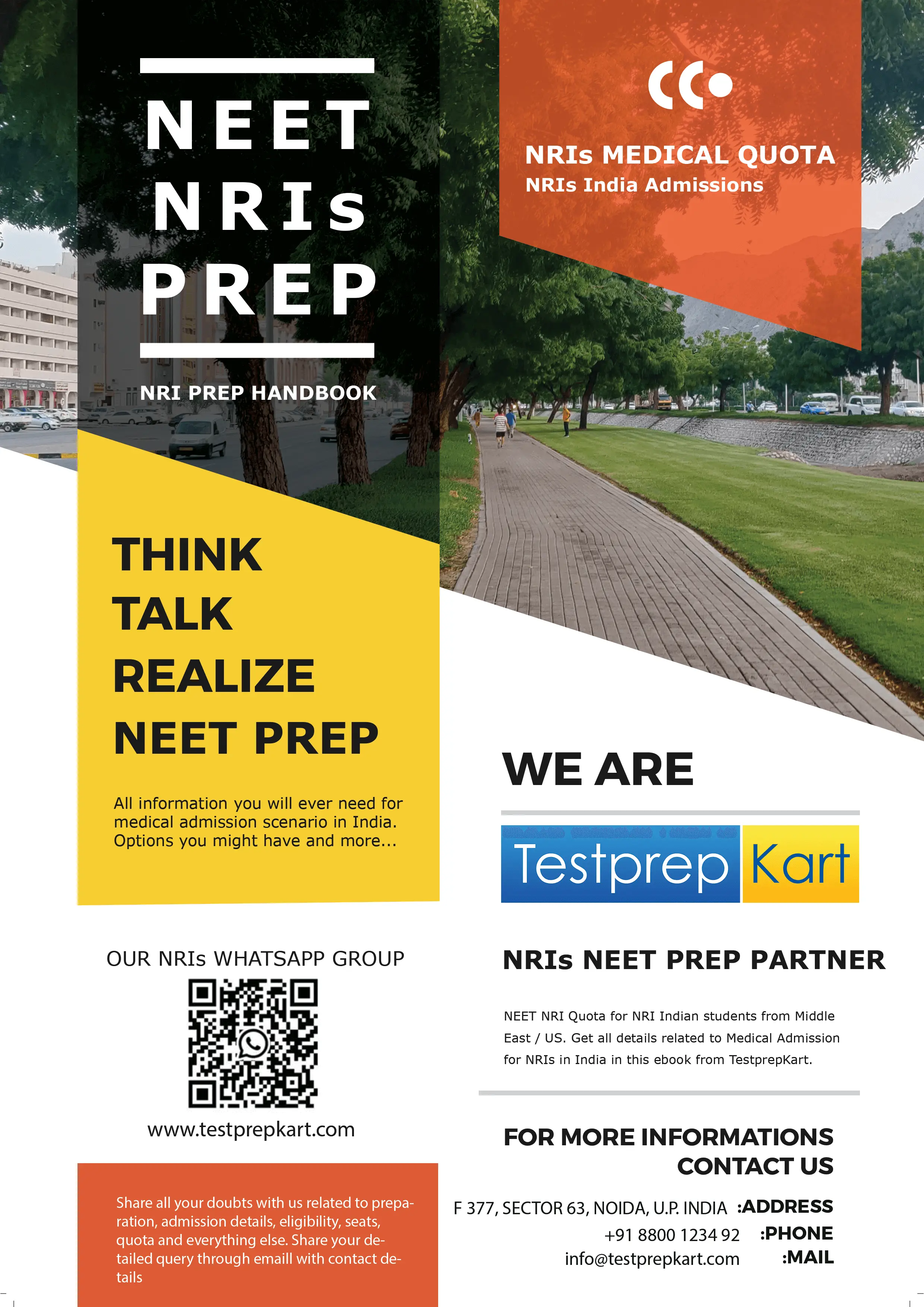
NEET NRI Preparation eBook is specially designed for the NRI students which will help students to clear some of the basic question related the NRI Quota, Preparation and others. Download the NRI NEET Prep eBook from the download button below

1. Is there any change in the NEET 2026 Physics syllabus?
Yes. The NEET 2026 Physics syllabus has been slightly revised by the National Medical Commission
(NMC).
A few new topics like practical and experimental skills have been added, while some complex topics such as rolling motion and Poiseuille’s law have been removed.
2. Who prescribes the NEET 2026 Physics syllabus?
The NEET Physics syllabus is prescribed by the National Medical Commission (NMC) and follows the latest NCERT Class 11 and 12 textbooks.
3. How many questions are asked from Physics in the NEET exam?
The Physics section consists of 45 questions, carrying a total of 180 marks in the NEET exam.
4. What are the most important topics in NEET 2026 Physics?
Some of the most important and frequently asked topics include:
5. Which Physics chapters are the hardest in NEET 2026?
According to previous year trends, the hardest chapters are Laws of Motion, Rotational Motion, Current Electricity, Magnetism, and Wave Optics because they involve deep conceptual understanding and numerical problem-solving.
6. Which Physics topics are easiest and most scoring in NEET 2026?
The easiest and most scoring topics are Units and Measurements, Physical World, Kinetic Theory, Electromagnetic Waves, and Semiconductors, as they are theory-based and require less calculation.
7. Is NCERT enough for NEET 2026 Physics preparation?
While NCERT provides the base, it’s not enough to score high in Physics. Students should also practice from books like H.C. Verma and D.C. Pandey for numerical and conceptual clarity.
8. How should I prepare for Physics for NEET 2026?
Start with Class 11 basics, make chapter-wise formula sheets, and solve previous year NEET Physics questions regularly. Take mock tests to improve speed and accuracy.
9. Are numerical problems important in NEET Physics?
Yes, nearly 60–70% of Physics questions in NEET are numerical-based. Focus on formula application, unit conversion, and problem-solving techniques.
10. Is the NEET Physics syllabus the same for Indian and NRI students?
Yes, the NEET 2026 Physics syllabus is identical for both Indian and NRI students. The topics, exam pattern, and marking scheme remain exactly the same for everyone.





Copyright © 2024 CounselKart Educational Services Pvt. Ltd.. All Rights Reserved


Post a Comment