


Hi, I’m TestprepKart.
Your Partner In Exam Preparation
Chemistry contributes 25% of the total marks in the NEET exam and plays a crucial role in stabilizing rank due to its predictable and scoring nature. A strong command of Chemistry often becomes the difference between an average score and a top rank.
Most Indian students and U.S.-based NRI aspirants complete the syllabus, study NCERT textbooks, practice sample papers, and refer to multiple Chemistry books. However, one of the most important steps for scoring consistently high marks is practicing previous years’ NEET Chemistry question papers.
Solving NEET Chemistry PYQs helps identify recurring NCERT concepts and question patterns. Download previous years’ papers below to strengthen your Chemistry preparation with accuracy and confidence.
| NEET Chemistry Previous Year Question Paper | Resource |
| NEET Chemistry Question Paper 2025 | Download PDF |
| NEET Chemistry Question Paper 2024 | Download PDF |
| NEET Chemistry Question Paper 2023 | Download PDF |
| NEET Chemistry Question Paper 2022 | Download PDF |
| NEET Chemistry Question Paper 2021 | Download PDF |
| NEET Chemistry Question Paper 2020 | Download PDF |
| NEET Chemistry Question Paper 2019 | Download PDF |
| NEET Chemistry Question Paper 2018 | Download PDF |
| NEET Chemistry Question Paper 2017 | Download PDF |
| NEET Chemistry Question Paper 2016 | Download PDF |
| NEET Chemistry Question Paper 2015 | Download PDF |
In the NEET exam, there is not a single question paper. Each year, NEET is conducted with multiple paper codes. Below, you will find the last 10 years’ NEET Chemistry question paper codes, which you can download to practice all variations and strengthen your Chemistry preparation.
| NEET 2025 Chemistry Paper Code | Resource |
| NEET Code-45 Paper | Download Now |
| NEET Code-46 Paper | Download Now |
| NEET Code-47 Paper | Download Now |
| NEET Code-48 Paper | Download Now |
| NEET 2024 Chemistry Paper Code | Resource |
| Q1 To Q6 | Download Now |
| R1 To R6 | Download Now |
| S1 To S6 | Download Now |
| T1 To T6 | Download Now |
| T1 To T6 | Download Now |
| NEET 2023 Chemistry Paper Code | Resource |
| E1 To E6 | Download Now |
| F1 To F6 | Download Now |
| G1 To G6 | Download Now |
| H1 To H6 | Download Now |
| NEET 2022 Chemistry Paper Code | Resource |
| Q1 To Q6 | Download Now |
| R1 To R6 | Download Now |
| S1 To S6 | Download Now |
| T1 To T6 | Download Now |
| NEET 2021 Chemistry Paper Code | Resource |
| M1 To M6 | Download Now |
| N1 To N6 | Download Now |
| O1 To O6 | Download Now |
| P1 To P6 | Download Now |

| NEET 2020 Chemistry Paper Code | Resource |
| E1 To E4 | Download Now |
| F1 To F4 | Download Now |
| G1 To G4 | Download Now |
| H1 To H3 | Download Now |
| NEET 2019 Chemistry Paper Code Resource | Resource |
| P1 To P6 | Download Now |
| Q1 To Q6 | Download Now |
| R1 To R6 | Download Now |
| NEET 2018 Chemistry Paper Code | Resource |
| AA | Download Now |
| BB | Download Now |
| CC | Download Now |
| DD | Download Now |
| EE | Download Now |
| FF | Download Now |
| GG | Download Now |
| HH | Download Now |
| KK | Download Now |
| LL | Download Now |
| MM | Download Now |
| NN | Download Now |
| PP | Download Now |
| Download Now | |
| RR | Download Now |
| SS | Download Now |
| WW | Download Now |
| NEET 2017 Chemistry Paper Code | Resource |
| A To D | Download Now |
| P To S | Download Now |
| W To Z | Download Now |
| NEET 2016 Chemistry Paper Code | Resource |
| A To D | Download Now |
| P To S | Download Now |
| W To Z | Download Now |
| NEET 2015 Chemistry Paper Code | Resource |
| A | Download Now |
| B | Download Now |
| C | Download Now |
| D | Download Now |

NEET Chemistry contributes 25% of the total score (180/720) and is one of the most scoring and rank-stabilizing subjects. For India-based and U.S.-based NRI aspirants, Chemistry PYQs reveal the real NEET pattern, helping students align NCERT concepts with NTA’s actual question design.
1. Understanding the real NEET Chemistry pattern:- PYQs show the exact balance between Physical, Organic, and Inorganic Chemistry, along with numerical intensity and concept depth something many mock tests fail to mirror accurately.
2. Identifying frequently asked Chemistry chapters:- Year-wise analysis highlights high-weightage chapters such as Equilibrium, Chemical Bonding, Thermodynamics, GOC, Hydrocarbons, Coordination Compounds, and Electrochemistry.
3. Mastering NCERT-based theory and reactions:- Inorganic and Organic Chemistry questions are often directly based on NCERT text, reactions, trends, and tables—patterns that become clear only through PYQ practice.
4. Improving accuracy and reducing negative marking:- Repeated exposure to PYQs trains students to avoid reaction-based traps, calculation mistakes, and conceptual confusion, leading to higher accuracy.
5. Developing exam-ready problem-solving speed:- Practicing real NEET Chemistry questions improves numerical speed in Physical Chemistry and decision-making in Organic and Inorganic sections.
6. Building confidence with real NEET-level Chemistry questions:- PYQs eliminate unpredictability by familiarizing students with NTA’s exact Chemistry question style, improving confidence and exam composure.

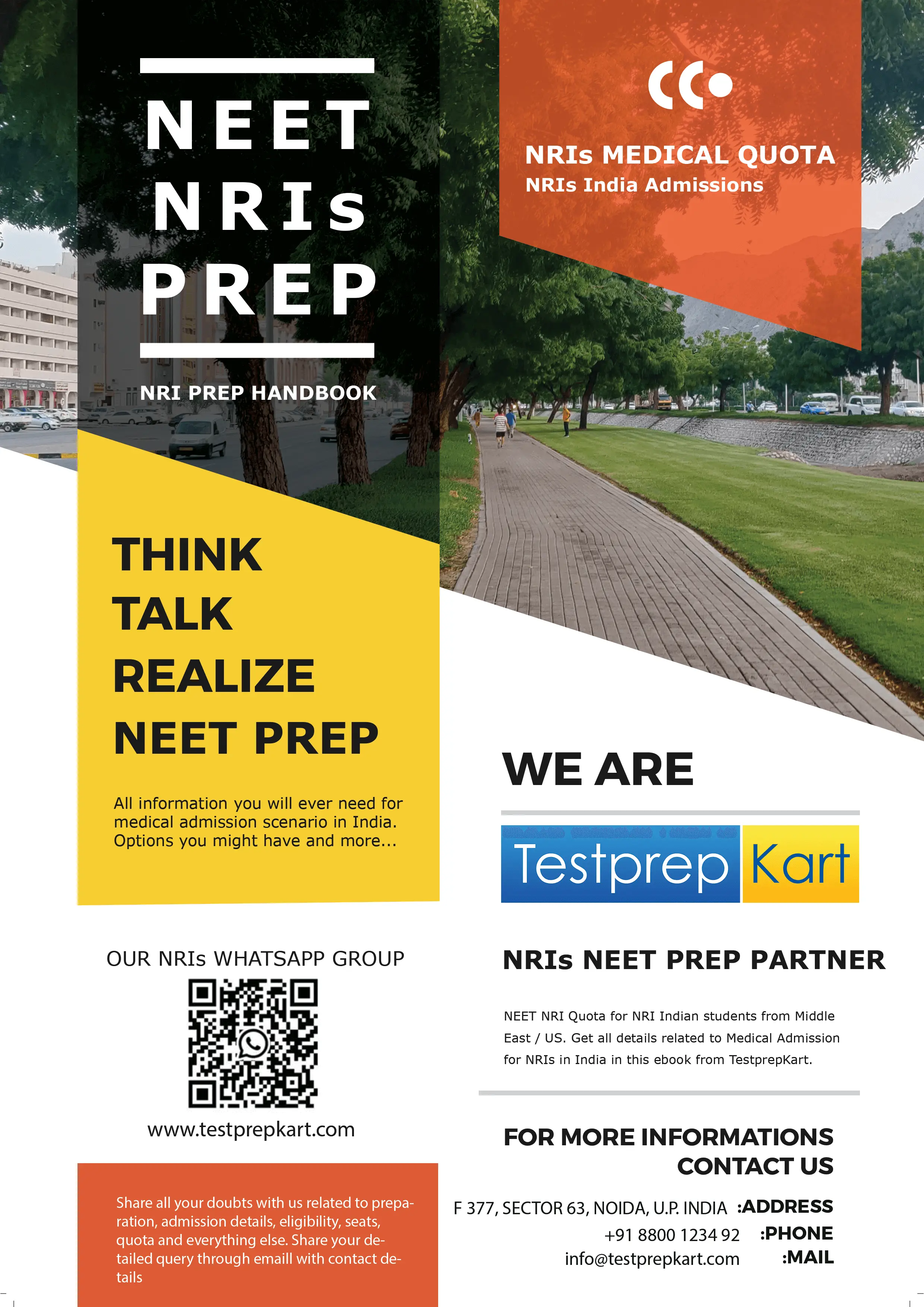
NEET NRI Preparation eBook is specially designed for the NRI students which will help students to clear some of the basic question related the NRI Quota, Preparation and others. Download the NRI NEET Prep eBook from the download button below.



1. Why are NEET Chemistry PYQs important for scoring well?
Chemistry is highly predictable. PYQs reveal recurring concepts, NCERT-based reactions, and numerical patterns that help students score consistently with high accuracy.
2. How much does Chemistry contribute to the NEET score?
Chemistry contributes 25% of the total marks (180/720), making it a key rank-stabilizing subject for NEET aspirants.
3. Are NEET Chemistry questions based on NCERT?
Yes. Inorganic and Organic Chemistry questions are heavily NCERT-based, including reactions, trends, tables, and direct theory lines.
4. How many years of NEET Chemistry PYQs should be practiced?
At least the last 10 years. This helps identify repeated chapters, evolving question patterns, and NTA’s consistent testing areas.
5. Do different NEET paper codes contain different Chemistry questions?
Yes. Each year has multiple paper codes with shuffled questions. Practicing all codes ensures complete coverage of all question variations.
6. Which Chemistry chapters are most frequently asked in NEET?
Equilibrium, Chemical Bonding, Thermodynamics, GOC, Hydrocarbons, Coordination Compounds, Electrochemistry, and Chemical Kinetics carry high repeated weightage.
7. Is Chemistry more scoring than Physics in NEET?
Yes. Chemistry is generally more scoring due to predictable patterns, NCERT-based questions, and fewer lengthy calculations than Physics.
8. How do Chemistry PYQs help reduce negative marking?
They train students to recognize common traps in reactions, calculations, and concepts, improving accuracy and reducing careless mistakes.
9. Are PYQs enough for NEET Chemistry preparation?
PYQs are essential but should be combined with NCERT reading, formula revision, and concept clarity for maximum score improvement.10. How should students use Chemistry PYQs for study planning?
Start with high-weightage chapters, solve PYQs topic-wise, analyze mistakes, and revise NCERT-linked concepts repeatedly for exam readiness.







Copyright © 2024 CounselKart Educational Services Pvt. Ltd.. All Rights Reserved


Post a Comment