


Hi, I’m TestprepKart.
Your Partner In Exam Preparation
For Indian-origin families living in the United States, pursuing NEET-UG for MBBS in India is increasingly viewed as a structured, cost-efficient, and time-optimized alternative to the traditional American pre-med to MD pathway.
For many Indian-origin families living in the United States, the traditional American pre-med to MD route is becoming increasingly long, expensive, and uncertain. Parents are now actively comparing structured alternatives that provide clarity, earlier clinical exposure, and predictable admission processes.
| Stage | USA Medical Route | India Medical Route |
| Entry Point | After Bachelor’s | After Grade 12 |
| Entrance Exam | MCAT | NEET-UG |
| Total Academic Years | 8+ Years | 5.5 Years |
| Residency | Mandatory | Optional (for specialization) |
| Total Timeline | 11–15 Years | 5.5 Years |
The US pathway typically includes undergraduate education, MCAT preparation, MD school, and residency. India compresses this structure significantly through a direct-entry model.
NRI Example:- A Houston-based NRI family realized their child could begin medical school at 18 in India instead of waiting until 22 after completing a US bachelor’s degree.
Strategic Solution:- Families should evaluate long-term career timelines, debt exposure, and age of financial independence. A structured comparison between US MD and Indian MBBS helps in making data-driven decisions early.

Time is one of the most underestimated costs in medical education. While the US medical route layers academic stages, the Indian MBBS model allows students to enter clinical medicine immediately after Grade 12.
| Milestone | India (MBBS) | USA (MD Route) |
| Start Age | 18 | 18 |
| Degree Completion | 23–24 | 26–27 |
| Residency Completion | 26–27 | 30–33 |
| Financial Independence | Mid-20s | Early 30s |
This compression significantly reduces opportunity cost and accelerates professional maturity.
NRI Example:- An NRI student from California could complete MBBS in India by 24, while peers in the US would still be finishing medical school applications.
Strategic Solution:- If early entry into professional life is a priority, families should calculate total productive years gained. Beginning clinical exposure earlier may offer both financial and career acceleration advantages.
Medical education in the United States is among the most expensive professional pathways globally. Even public institutions require significant tuition, while private MD programs often exceed $250,000-$300,000 excluding living expenses.
| Expense Component | India (NRI MBBS) | USA (Private MD) |
| Undergraduate Degree | Not Required | $80,000–$200,000 |
| Medical Degree | Moderate–High | $200,000–$300,000 |
| Living Expenses | Lower | High |
| Total Exposure | Lower Overall | Often $300,000+ |
| Debt Burden | Moderate | High |
Even under NRI quota, cumulative cost frequently remains lower due to elimination of undergraduate tuition and multi-cycle applications.
NRI Example:- A New Jersey-based NRI family projected $350,000 in US medical education costs but found Indian NRI MBBS options significantly lower overall.
Strategic Solution:- Families should evaluate total lifecycle cost, including interest accumulation, delayed income, and residency uncertainty. A holistic financial projection clarifies whether MBBS offers long-term economic efficiency.
The Indian medical admission system is centralized and merit-driven. Students qualify through NEET-UG conducted by the National Testing Agency, and counselling is managed nationally.
| Factor | India | USA |
| Entry Level | After Grade 12 | After Bachelor’s |
| Selection Criteria | NEET Rank | GPA + MCAT + Resume |
| Application Rounds | Centralized | Multiple Schools |
| Interview Process | Limited | Extensive |
| Gap Year Risk | Low | High |
Admission in India is rank-driven, reducing holistic profile uncertainty.
NRI Example:- A US-based Indian student strong in academics preferred a rank-based admission model rather than depending on holistic profile reviews and interviews.
Strategic Solution:- Students comfortable with competitive exam formats can benefit from the clarity of NEET. Early preparation aligned with NCERT curriculum improves predictability and reduces admission uncertainty.

Indian medical colleges are regulated by the National Medical Commission, ensuring infrastructure and hospital requirements.
| Factor | India | USA |
| Patient Volume | High | Moderate |
| Exposure Start | Early Clinical Years | Later Rotations |
| Case Diversity | Broad | Structured |
| Hands-on Practice | Early (Supervised) | Gradual |
India’s population density translates into diverse, high-frequency case exposure.
NRI Example:- An NRI student from Chicago reported seeing more real-time clinical cases in early years compared to friends studying pre-med in the US.
Strategic Solution:- Parents should assess affiliated teaching hospital capacity and patient load before selecting colleges. Clinical immersion quality significantly impacts practical competence and postgraduate preparedness.
NRI seats are allocated through centralized counselling conducted by the Medical Counselling Committee.
| Requirement | Purpose |
| Student Passport | Identity Verification |
| Sponsor Passport | NRI Status Proof |
| Employment/Residence Proof | Eligibility Confirmation |
| Relationship Affidavit | Sponsor Link Validation |
| NEET Qualification | Mandatory Eligibility |
| OCI Card | If Applicable |
Seats are limited and documentation-sensitive.
NRI Example:- A Texas-based sponsor faced document rejection due to minor affidavit formatting errors during counselling participation.
Strategic Solution:- Families should prepare documentation months in advance and seek expert guidance during counselling rounds. Accuracy in paperwork prevents seat cancellation or eligibility disqualification.
Yes. Graduates can pursue the US pathway through USMLE examinations regulated by the Educational Commission for Foreign Medical Graduates.
| Step | Requirement |
| Step 1 | Basic Sciences |
| Step 2 CK | Clinical Knowledge |
| US Clinical Experience | Hospital Rotations |
| Residency Match | Competitive Selection |
Planning must begin during MBBS.
NRI Example:- An NRI student in Karnataka prepared for USMLE Step 1 during second year MBBS and later secured US residency interviews.
Strategic Solution:- Students planning US return must integrate USMLE preparation early, maintain strong academic records, and secure US clinical rotations to remain competitive in residency matching.
Beyond academics, many NRI parents value cultural grounding, family proximity, and identity reinforcement.
| Factor | India | Major US Cities |
| Accommodation | Lower Cost | High |
| Food & Living | Affordable | Expensive |
| Family Network | Strong | Limited |
| Cultural Connection | Deep | Limited |
Adjustment challenges exist but adaptation is common.
NRI Example:- A second-generation Indian-American student initially struggled with adjustment but later appreciated reconnecting with extended family and heritage.
Strategic Solution:- Families should prepare students emotionally before relocation. Pre-visit campus tours, peer networking, and gradual transition planning ease cultural adaptation challenges.
NEET is conducted by the National Testing Agency annually and follows a predictable exam framework.
| Component | Focus |
| NCERT Mastery | Concept Clarity |
| Previous Year Questions | Pattern Recognition |
| Mock Tests | Speed & Accuracy |
| Rank Strategy | Competitive Alignment |
| Online Support | Time Zone Flexibility |
Preparation is structured and syllabus-bound.
NRI Example:- A Florida-based NRI student used online NEET coaching to maintain discipline while balancing US high school academics.
Strategic Solution:- Early alignment with NCERT curriculum, structured mock schedules, and mentorship reduce exam anxiety and improve rank predictability for overseas students.
When comparing India and USA pathways, holistic evaluation ensures clarity.
| Factor | India (MBBS) | USA (MD) |
| Entrance | NEET-UG | MCAT |
| Duration | 5.5 Years | 8+ Years |
| Cost | Moderate–High | Very High |
| Licensing | NEXT (Proposed) | USMLE |
| Debt Risk | Lower | High |
| Entry Age | 18 | 22–23 |
| Clinical Start | Early | Later |
| Total Training | Shorter | Longer |
NRI Example:- A Boston-based NRI family created a 15-year financial projection comparing debt burden and retirement timelines before choosing the MBBS pathway.
Strategic Solution:- Families should conduct side-by-side academic, financial, and geographic planning. The best decision aligns with long-term career location, adaptability, and structured preparation capacity.
NEET in India is not universally suitable. Students firmly committed to lifelong US practice without willingness to relocate may prefer the American MD route.
| Situation | Recommended Path |
| US-only Practice Goal | USA MD |
| Comfortable Relocation | India MBBS |
| Prefers Profile-Based Selection | USA |
| Comfortable with Competitive Exams | India |
| Long-Term India Specialization | India |
NRI Example:- A student determined to practice exclusively in New York chose the US MD route to avoid additional licensing and relocation complexities.
Strategic Solution:- Clarity about final practice geography is essential. Families should define long-term professional location before committing to either medical pathway.

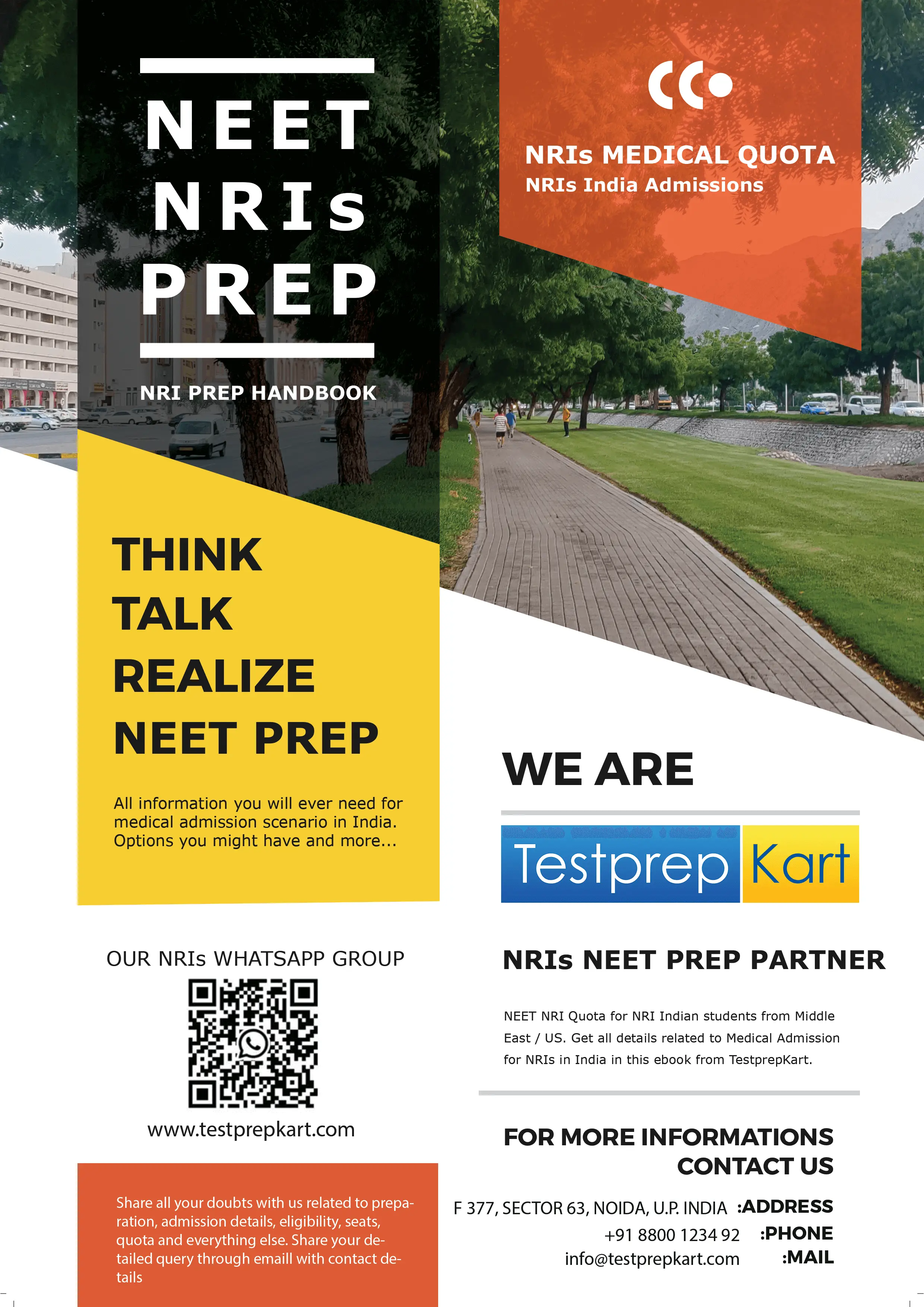
NEET NRI Preparation eBook is specially designed for the NRI students which will help students to clear some of the basic question related the NRI Quota, Preparation and others. Download the NRI NEET Prep eBook from the download button below.



1. Is NEET mandatory for NRI students seeking MBBS admission in India?
Yes. All students, including NRIs, must qualify in NEET-UG conducted by the National Testing Agency to be eligible for MBBS admission under any quota in India.
2. How much cheaper is MBBS in India compared to the US MD route?
Even under NRI quota, MBBS in India often costs significantly less than the full US pathway, which includes undergraduate tuition, MCAT preparation, MD fees, and extended living expenses.
3. Can an NRI student return to the United States after completing MBBS in India?
Yes. Graduates can appear for USMLE exams regulated by the Educational Commission for Foreign Medical Graduates and pursue US residency, provided they meet exam score and clinical experience requirements.
4. Is clinical exposure in India strong enough for international standards?
Yes. Colleges regulated by the National Medical Commission ensure hospital infrastructure, and high patient volumes provide diverse, hands-on clinical experience from early academic years.
5. Who qualifies under the NRI quota for MBBS admission?
Students sponsored by parents or close relatives residing abroad with valid passport, NRI status proof, and relationship affidavit can apply under NRI quota, subject to counselling regulations.
6. What is the total duration of MBBS in India compared to the US MD pathway?
MBBS in India takes 5.5 years including internship, whereas the US pathway typically requires 8 years of education plus 3–7 years residency before independent practice.
7. Is NEET preparation possible for students studying in US high schools?
Yes. With structured online coaching, NCERT-focused preparation, and scheduled mock tests, US-based students can systematically prepare for NEET alongside their high school curriculum.
8. Does studying MBBS in India limit global career opportunities?
No. Graduates may pursue postgraduate pathways in the US, UK, Australia, or Middle East after meeting respective licensing requirements and clearing qualifying examinations.
9. Are NRI seats available in government medical colleges?
Yes. NRI seats are available in select government and deemed universities through centralized counselling conducted by the Medical Counselling Committee.
10. How should NRI families decide between MBBS in India and MD in the USA?
Families should compare total cost, timeline, debt exposure, long-term practice location, and student adaptability. A structured 10–15 year academic and financial projection helps ensure a confident decision.





Copyright © 2024 CounselKart Educational Services Pvt. Ltd.. All Rights Reserved


Post a Comment