






Hi, IÔÇÖm TestprepKart.
Your Partner In Exam Preparation
If you’re an NRI, CIWG, OCI, or Foreign National student applying to engineering colleges in Maharashtra especially if you are applying from the USA, UAE, Qatar, Kuwait, Bahrain, Oman, and Saudi Arabia, you may have already noticed a major concern: registration fees for NRI-category applicants are significantly higher compared to those charged to Indian resident students. These fees remain non-refundable, even if a seat is not allotted during counselling.
During recent admission cycles, many NRI families have reported making payments at multiple stages of the process, with total registration charges reaching nearly $1,200 or more. In comparison, Indian students typically pay only ₹1,000–₹2,500 ($12–$30), creating a sharp and unexpected cost difference that has surprised many NRI parents.
Get JEE Prep Help Download NRI JEE E-Book
Here’s how the registration and application fee process typically works today for NRI or CIWG applicants, especially families applying from the USA and Middle East:
In total, families end up paying close to $1,200 just for the application process, even before tuition fees or seat-acceptance charges come into the picture.
Exact fee breakdown for the 2026 cycle must be verified once the official notifications for each state/college are released.
What frustrates most NRI parents, particularly those applying from the USA, UAE, Qatar, Kuwait, Saudi Arabia, and other Gulf countries, is the lack of a unified, transparent system.
There is no single-window portal that manages every step. Instead:
For many families, especially those applying to multiple institutes, these repeated non-refundable charges become a significant financial concern.

If you are applying under the CIWG or NRI category in Maharashtra, especially from the USA or Middle East, here are some important points to understand before beginning the process:
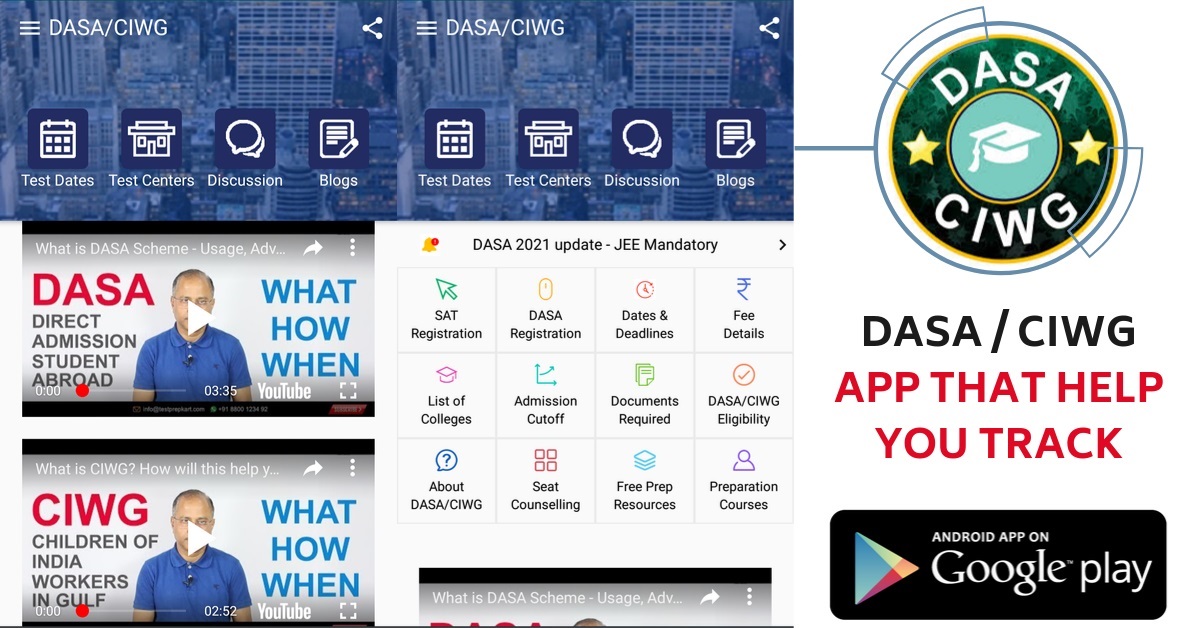
Compare this with national-level schemes like DASA/CIWG, which generally offer a more standardized and predictable structure, making it easier for NRI families in the USA and Middle East to plan financially and avoid unnecessary expenditures.
Expect high upfront registration costs, often totaling close to $1,200, spread across multiple platforms and payment steps.
Exact updated fee structure for 2026 must be verified once official notifications are released.
Do not expect refunds, even if your application is rejected, documents are not accepted, or you are not allotted a seat in any of the rounds. Most state-level counselling bodies treat these fees as non-refundable processing charges.
Always double-check what each fee actually covers before making a payment. In Maharashtra, applicants frequently pay on different portals, leading to confusion about which fee corresponds to which stage of the process.

Enhance your JEE preparation further by downloading our exclusive NRI Quota Prep eBook. Tailored to cater to the needs of Non-Resident Indian students, this comprehensive guide complements, providing valuable insights and strategies for success. Don’t miss out on this essential resource-click to download and elevate your JEE readiness today!

1. Why are NRI applicants charged much higher registration fees in Maharashtra?
Maharashtra treats NRI and CIWG admissions under a separate category with significantly higher processing charges. These fees are non-refundable and split across multiple portals, creating a financial burden for families applying from the USA, UAE, Qatar, Kuwait, Oman, and Saudi Arabia.
2. Are the total charges of around $1,200 fixed for all colleges?
No. The exact amount varies by counselling authority, but many NRI families consistently report cumulative fees approaching $1,200 due to payments across multiple platforms. The precise 2026 fee structure must be confirmed once official notifications are released by the state.
3. Why are NRI registration fees non-refundable even without seat allotment?
State authorities classify these charges as administrative and processing fees, making them non-refundable regardless of results. Even if documents are rejected or no seat is allotted, applicants from the USA and Middle East do not receive refunds for these payments.
4. Do Indian-resident students pay the same registration fees as NRI applicants?
No. Indian students usually pay between ₹1,000–₹2,500 ($12–$30), far lower than the approximately $1,200 paid by NRI candidates. This gap has raised major concerns among families applying from the USA, UAE, Qatar, Kuwait, Bahrain, and Saudi Arabia.
5. Why does Maharashtra require payments on different portals?
The counselling process lacks a unified, single-window system. NRI applicants must register, verify documents, and pay fees across separate platforms, creating confusion. With each portal charging independently, families from abroad often find the process unclear and financially demanding.
6. Does paying higher fees improve the chances of getting a seat?
No. Seat allotment is based solely on merit, primarily JEE Main rank or qualifying exam performance. Registration fees do not offer any advantage and only grant eligibility for participation in the counselling process. Selection remains completely rank-driven.
7. Do CIWG students pay the same registration fees as other NRI applicants?
CIWG students may pay similar or slightly reduced charges, though fees remain high and non-refundable. Tuition concessions apply only after admission. During registration, all CIWG applicants, including those from Gulf countries, must still pay upfront for multiple processing stages.
8. Are payments required before documents are verified?
Yes. Most Maharashtra authorities require full registration and processing fees before any document review or merit evaluation. If documents are later rejected, NRI students from the USA and Middle East still lose the entire amount as no refund is provided.
9. Is the Maharashtra NRI fee structure transparent?
Not fully. Families often report unclear explanations regarding each fee component and difficulty understanding why multiple payments are required. Without a centralised portal, applicants must track charges spread across different systems, reducing clarity for overseas families.
10. Are NRI fees similar across all Indian states?
No. Maharashtra is among the highest in terms of NRI registration costs. Other states often charge far less. National schemes like DASA/CIWG provide a more predictable fee structure, making financial planning easier for NRI students in the USA and Middle East.
11. Can families reduce fees by applying to fewer colleges?
No. These charges apply to the counselling system itself, not the number of institute choices. Even if an applicant selects only one college, they must still pay full registration, verification, and processing fees across separate Maharashtra platforms.
12. Are NRI registration fees expected to increase for 2026?
There is no confirmation yet. Fees depend on annual updates issued by Maharashtra authorities. Families applying from the USA and Middle East should monitor official notifications, as NRI charges have historically remained high and non-refundable.
13. What precautions should families take before paying fees?
Applicants should verify each payment step carefully, use only official portals, prepare all documents beforehand, and understand that no refunds apply. NRI parents from the Gulf and the USA should budget for multiple payments and avoid assumptions about fee reversals.
14. How does Maharashtra’s process compare with DASA/CIWG admissions?
DASA/CIWG follows a clearer, transparent, and standardized structure with uniform fees and a single counselling system. Maharashtra’s multi-portal system and high non-refundable charges make the process more challenging for NRI students applying from the USA and Middle East.
15. Should NRI students still consider Maharashtra engineering admissions?
Yes, but with awareness. Maharashtra has strong engineering institutes, but NRI applicants must be prepared for high non-refundable fees and multiple payment stages. Many families apply to Maharashtra while also considering DASA/CIWG for more transparent and predictable options.








Copyright © 2024 CounselKart Educational Services Pvt. Ltd.. All Rights Reserved


Post a Comment