






Quick answer: 1-on-1 JEE coaching in the USA is online private tutoring in Physics, Chemistry and Mathematics. TestPrepKart offers personalized JEE preparation for NRI and Indian-American students studying in U.S. high schools. The plan should match the student’s current subject knowledge, target exam and school calendar, with class times confirmed for the family’s U.S. time zone.
Choose private JEE tutoring when a student needs focused help with particular chapters, a different teaching pace or a schedule that does not fit a group course. Our JEE coaching guide for NRI students in the USA explains the broader preparation options. Select the level of individual support around your child’s actual needs.
According to NTA’s JEE Main 2026 Information Bulletin, Paper 1 has 75 questions worth 300 marks, with a standard duration of 3 hours. It tests Physics, Chemistry and Mathematics. These figures describe the 2026 B.E./B.Tech. paper; eligible candidates may receive compensatory time. For a preparation overview, read TestPrepKart’s JEE Main and Advanced exam pattern guide.
Content reviewed: September 10, 2026. This guide includes a school-to-JEE comparison, a sample weekly schedule and nationality-specific IIT guidance. Admission examples describe the 2026 rules; confirm the requirements for the student’s application year.
What is 1-on-1 JEE coaching for students in the USA?
In a 1-on-1 JEE lesson, the tutor works with one student. Lessons can focus on the full Physics, Chemistry and Mathematics syllabus, one subject, revision or advanced problem solving. The useful distinction is how the tutor chooses the next task: the student’s work should determine what needs explanation, practice or retesting.

| Preparation focus | When it fits | First priority | Course details |
|---|---|---|---|
| Full PCM preparation | Grades 11 and 12 or an eligible gap-year student | Assess all three subjects and map the remaining syllabus. | View JEE courses |
| Syllabus gap support | School topics and JEE topics do not fully align | Identify chapters that have not been studied. | View JEE courses |
| Advanced problem solving | A student preparing for JEE Advanced | Check readiness for problems that combine several concepts. | View JEE courses |
| One-subject tutoring | Physics, Chemistry or Mathematics needs extra help | Target the source of repeated mistakes. | View JEE courses |
| Foundation support | Grades 8 to 10 | Strengthen prerequisite Mathematics and Science. | View JEE courses |
| Revision support | An approaching exam with remaining weak areas | Prioritize revision using recent test evidence. | View JEE courses |
What should a personalized JEE coaching plan include?
A personalized JEE plan should make the teaching and review process visible to both student and parent. Before enrolling, ask which of the following items are included in the quoted course and how often the family will receive an update.
| Plan component | Evidence to request |
|---|---|
| Starting assessment | A subject-by-subject review of completed chapters and unresolved problems. |
| Chapter roadmap | A syllabus checklist with priorities and review dates. |
| Assigned tutors | Names, subject responsibilities and relevant JEE teaching experience. |
| Independent practice | Assignments selected for the student’s current level, with a feedback process. |
| Doubt support | The contact channel and expected response time outside scheduled lessons. |
| Test review | An explanation of missed questions and a plan to revisit them. |
| Parent updates | A summary of progress, remaining gaps and the next set of priorities. |
| Class arrangements | Session length, recurring U.S. local time and rescheduling terms. |
See Whether 1-on-1 JEE Coaching Fits Your Child
Share the student’s grade, U.S. time zone, current PCM level, school curriculum and JEE goal. Use a trial session to evaluate the teaching fit before choosing a longer plan.
Which JEE preparation problems can private tutoring address?
A low test score can come from different problems. More class time helps only when the tutor identifies the cause and assigns the right follow-up work. Use the following diagnostic guide when discussing a student’s recent mistakes.
| What the student does | Possible cause to investigate | Useful follow-up |
|---|---|---|
| Cannot explain why a solution method works | An incomplete concept or prerequisite | Rebuild the concept, then solve a fresh question independently. |
| Understands the solution but makes calculation errors | Weak execution or checking habits | Practice a short set and record the exact error in each attempt. |
| Solves familiar examples but struggles with changed wording | Dependence on memorized patterns | Compare differently worded problems that use the same idea. |
| Completes questions correctly only without a time limit | Slow setup, calculation or question selection | Use timed sets and review where time was spent. |
Download Free JEE E-Book for NRI Students
Looking for 1-on-1 JEE preparation from the USA? Download the free TestPrepKart JEE E-Book for a structured preparation roadmap, mock-test planning, revision strategy and NRI engineering-admission guidance.

What You Will Get Inside This JEE E-Book
- Complete JEE preparation roadmap for NRI students
- Personalized revision and problem-solving planning
- DASA admission guidance through JEE Main
- IIT, NIT, IIIT and college selection planning
- Document planning for NRI students
- Mock test and revision strategy
- Study plan for students in USA and abroad
How do AP and IB courses fit into a JEE study plan?
AP or IB coursework can provide a useful starting point for JEE preparation, but the exact overlap depends on the courses a student takes. Compare the student’s completed topics with the JEE syllabus. TestPrepKart’s JEE Main syllabus guide can help organize this review. The examples below are a planning comparison based on NTA’s 2026 syllabus and College Board course outlines, not a formal equivalence assessment.
| School course | Relevant course content | What to check for JEE |
|---|---|---|
| AP Physics 1 | Mechanics, oscillations and fluids. | Assess these topics, then check JEE areas such as electrostatics, current electricity and optics separately. |
| AP Calculus AB | Limits, derivatives and integrals. | Also check algebra, coordinate geometry, vectors and probability. Calculus performance alone does not establish full Mathematics coverage. |
| AP Chemistry | General chemistry, including atomic structure, bonding and reactions. | Review the JEE Organic Chemistry and coordination-compound requirements explicitly. |
| IB or other high-school courses | Content varies with the chosen subjects, course level and school sequence. | Use the student’s actual course outlines and completed work to mark each JEE topic as studied, partly studied or new. |
Keep a shared chapter checklist. A topic marked “studied at school” should still be checked with independent JEE questions before the tutor reduces practice time.
Schedule a free 1-on-1 JEE trial session
Bring a recent test or a few questions your child found difficult, plus the school timetable. Ask the tutor to explain one missed question, identify the prerequisite and suggest the next practice task. Use the session to evaluate the explanation and teaching pace.

Book Free 1-on-1 JEE SessionJoin JEE WhatsApp UpdatesConnect With JEE Counsellor
Can JEE classes fit U.S. school hours and time zones?
TestPrepKart families can discuss recurring online JEE classes for Eastern, Central, Mountain or Pacific time, subject to tutor availability. Confirm the student’s city, local time zone, session length and school commitments before booking. Calendar invitations should use the correct location-based time zone so seasonal clock changes are handled.
An example of a six-hour planning week
The following schedule illustrates how to separate teaching, independent work and review. It is not a prescribed workload or a TestPrepKart course package. A student’s required preparation time depends on the remaining syllabus, current readiness, exam target and available months.
| Activity | Example allocation | Purpose |
|---|---|---|
| Live tutoring | 3 sessions × 60 minutes = 3 hours | Work through the week’s selected topics. |
| Independent practice | 4 blocks × 30 minutes = 2 hours | Attempt questions without the tutor’s help. |
| Mistake review and retest | 1 block × 60 minutes = 1 hour | Explain errors and check whether corrections transfer to new questions. |
| Total | 360 minutes = 6 hours | Adjust the allocation after reviewing the student’s work. |
Plan full mock tests separately as exam readiness develops. Rebalance the week around AP or IB assessments, school finals, travel and extracurricular commitments, and confirm any class changes in advance.
How does 1-on-1 tutoring work in each JEE subject?
JEE Physics tutoring
Start with the physical model: what is moving, which forces act and which quantities are known? A tutor can then check diagrams, equations, units and limiting cases. The student should solve a related question independently before moving to a timed set.
JEE Chemistry tutoring
Organize Chemistry work by the type of difficulty. Physical Chemistry may need numerical practice; Organic Chemistry may need clearer reaction reasoning; Inorganic Chemistry may need a more precise revision plan. Choose the task from the student’s mistakes and the current syllabus.
JEE Mathematics tutoring
Ask the student to explain the first step before calculating. Review algebraic manipulation and the choice of method, then use mixed questions to check whether the student can recognize the same concept in an unfamiliar problem. Use suitable JEE previous-year questions to practice applying concepts in the exam’s question style.
Should a U.S. student choose 1-on-1 or group JEE coaching?
Choose 1-on-1 JEE coaching when the student needs substantial changes to pace, chapter priorities or schedule. A group course may fit an independent student who can follow the timetable and benefits from learning with peers. Compare the actual support offered by each provider.
| Criterion | 1-on-1 coaching | Group coaching |
|---|---|---|
| Teaching pace | Can change for one student. | Usually follows a shared class plan. |
| Chapter priorities | Can devote more time to a specific gap. | Often works through a common syllabus sequence. |
| Class participation | Direct tutor interaction throughout the lesson. | Peer questions and group discussion may add value. |
| Timing | Agreed with the tutor, subject to availability. | Usually set by the batch timetable. |
| Feedback | Confirm how individual work is reviewed. | Ask about individual reviews and doubt sessions. |
| Cost comparison | Request the session count and included support. | Compare the same teaching hours and included support. |
How does a TestPrepKart JEE plan begin?
Start with the student’s grade, school courses, target year and recent Physics, Chemistry and Mathematics work. TestPrepKart’s personalized coaching inquiry can help a family discuss subject support and available class arrangements. Confirm the roadmap and service terms for the selected plan.
A step-by-step plan to agree with the tutor
- Define the target: record the exam year, college interests and possible admission route.
- Assess the starting point: review completed school topics and independent JEE work.
- Choose priorities: identify missing prerequisites and chapters needing practice.
- Agree the schedule: specify lesson times, independent work and review points.
- Teach and practice: move from explanation to independent attempts.
- Review and adjust: use new work to decide which topics need further attention.
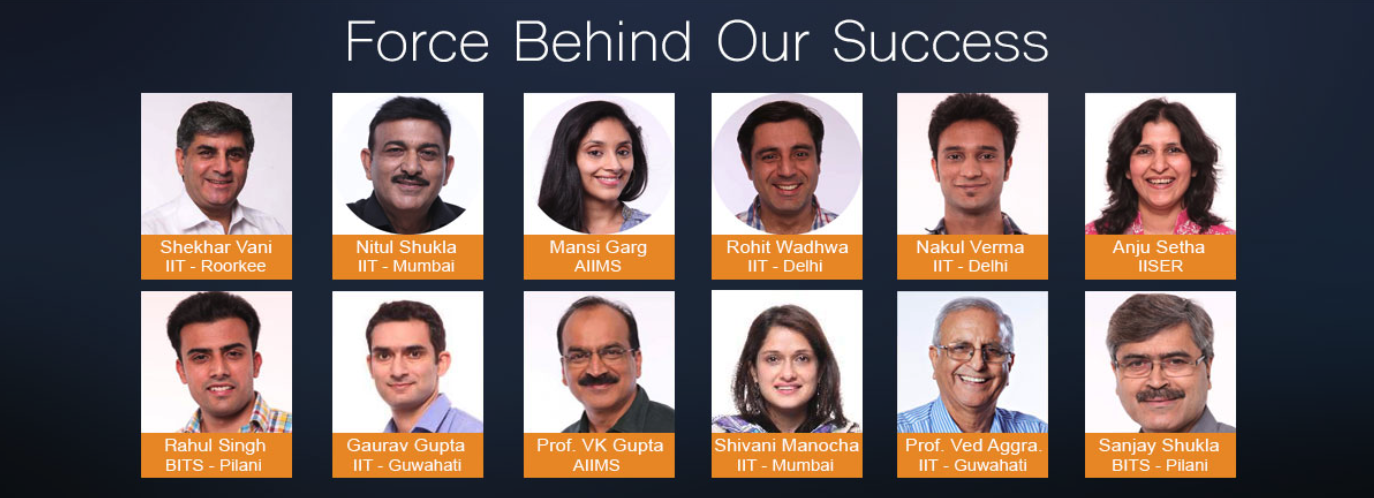
Meet TestPrepKart’s JEE faculty for personalized coaching
Ask for the assigned tutor’s name, subject, qualifications and relevant JEE teaching experience. Confirm who will teach the selected course and conduct test reviews, then use the trial to assess how clearly the tutor explains a question your child found difficult.
Speak with an IIT Admission Advisor
What should JEE preparation focus on at each grade?
In this guide, “Grade 11” and “Class 11” describe the same numbered school year, and the same naming convention applies to other grades. The admission authority still determines whether a particular school qualification meets its examination requirements.
| Student stage | Suggested priority | What to review before increasing intensity |
|---|---|---|
| Grades 8 and 9 / Classes 8 and 9 | Build Mathematics and Science foundations. | Understanding of prerequisites and sustainable study habits. |
| Grade 10 / Class 10 | Map the transition into JEE topics. | Algebra, trigonometry and foundational science knowledge. |
| Grade 11 / Class 11 | Develop a full PCM roadmap. | School course sequence and progress in independent practice. |
| Grade 12 / Class 12 | Prioritize remaining gaps, revision and testing. | Time to the target exam and recent topic-level performance. |
| Gap year | Build a focused plan from previous work. | Target-year exam eligibility before committing to a course. |
When is a private JEE tutor a useful choice?
Private tutoring is worth considering when the student can name a specific need that individual instruction can address. Common examples include:
- One subject consistently needs more explanation than the others.
- School courses have left several JEE topics uncovered.
- A fixed batch timetable conflicts with U.S. school commitments.
- The student needs regular feedback on independently attempted questions.
A student who follows a group course comfortably may need only occasional individual support. Use the assessment and trial to decide the level of tutoring.
Which JEE pathway applies to a U.S. student targeting IITs?
The IIT examination route depends on citizenship and the applicable OCI/PIO category. Confirm the category before choosing a JEE Main and JEE Advanced plan. The following distinctions summarize the official 2026 eligibility rules. Our IIT admission guide for NRI students explains the wider admission context.
| Applicant category | JEE pathway to check | Related TestPrepKart guide |
|---|---|---|
| Indian national, including an Indian citizen living in the USA | Must meet the JEE Main qualification requirement and the other JEE Advanced eligibility criteria. | JEE eligibility for NRI students |
| Foreign national or OCI/PIO (F) | May register directly for JEE Advanced without taking JEE Main, subject to the other eligibility criteria. | JEE Main and Advanced for NRI students |
| OCI/PIO card issued before March 4, 2021 | The 2026 rules allow a choice of OCI/PIO (I) or OCI/PIO (F); the chosen category determines the applicable route. | JEE eligibility for OCI students |

For IIT preparation, agree how the tutor will assess readiness for JEE Advanced questions and review multi-step solutions. Passing an exam or completing a coaching course does not itself secure an IIT seat; the applicant must also meet the applicable admission and seat-allocation conditions.
How does JEE Main support NIT, IIIT and DASA planning?
For B.E./B.Tech. admission, the DASA 2026 rules require a valid JEE Main Paper 1 score card and rank. DASA covers its participating institutes, including NITs and IIITs; it is not the IIT admission route. Read our DASA admission guide for NRI students for the wider process.
Keep the academic target and the admission tasks on the same planning sheet. Review NIT admission for NRI students and IIIT admission through DASA while comparing college options, and confirm which counselling process applies to the student.
What should U.S. families check before planning DASA admission?
Review DASA eligibility for NRI and OCI students against the student’s complete profile before planning an application. U.S. residence alone does not establish eligibility.
| Check | Information to verify |
|---|---|
| Applicant category | Citizenship, OCI/PIO status and applicable schooling requirements. |
| Academic requirements | Qualifying examination, required subjects, marks and relevant JEE Main rank. |
| Documents | Identity, school records and category evidence. Use the document-planning section of the DASA registration guide. |
| Admission choices | DASA participating colleges and programs, branches, seat categories and applicable fees. |
| Application year | DASA admission dates, notices and deadlines for the intended intake. |
CIWG: U.S. residence alone does not qualify a student for CIWG; the scheme has Gulf-employment and documentation conditions. Our DASA and CIWG guide explains the different admission categories.
How should families compare colleges and branches?
Build a college list around the student’s academic interests, realistic exam preparation and confirmed admission route. Use current official information when comparing options.
- Academic fit: compare the branch curriculum with what the student wants to study.
- Admission evidence: compare DASA cutoff and closing-rank trends only within the same route, category, branch and round.
- Total cost: review the fee-planning sections of the DASA admission guide, then check the institute’s tuition, hostel charges and other published fees.
- Family practicalities: discuss location, travel, living arrangements and student support.
Use our DASA counselling and choice-filling guide to organize branch preferences, and review how DASA seat allotment works. Historical cutoffs are a planning reference, not a prediction of the next allotment.
JEE student stories at TestPrepKart
Use student stories to identify questions for a trial session, such as how teaching, independent practice and test review were organized. An individual student’s outcome is not a forecast for another student.


Schedule Free JEE Online Session Download JEE Prep E-Book for NRI
How much does 1-on-1 JEE coaching cost in the USA?
Request a written TestPrepKart quote for the selected subjects, session count, session length and course period. This guide does not state a fixed fee. Compare the total payable amount and included support so that two quotations refer to comparable services.
| Fee detail | Question for the provider |
|---|---|
| Subjects and tutors | Does the quote cover all three subjects or selected subjects, and who teaches them? |
| Teaching hours | How many sessions are included, and how long is each session? |
| Assignments and doubts | Are checking, feedback and support outside class included? |
| Tests and analysis | Which tests and tutor review sessions are included? |
| Changes and expiry | What are the cancellation, rescheduling, refund and unused-session terms? |
| Payment details | What currency is charged, and are taxes or other fees additional? |
To compare scheduled teaching time, calculate session count × minutes per session ÷ 60. Then compare the included assessment, doubt support and review work separately.
Get a Personalized JEE Coaching Plan
For an accurate fee and schedule, first decide the student’s subjects, weekly class requirement and preparation stage. TestPrepKart can recommend a suitable plan after understanding these details.
What should parents check during a JEE trial?
Use the trial to assess the tutor’s explanation, the student’s participation and the proposed next step. A useful trial gives the family something specific to evaluate.
- Ask the student to bring a question they attempted and could not finish.
- Observe how the tutor identifies the misunderstanding and explains it.
- Have the student attempt a related question without step-by-step prompting.
- Ask what work should follow and how the tutor will review it.
- Confirm the assigned tutor, class schedule and written service terms.
Discuss these points through the JEE coaching inquiry before choosing a longer plan.
What information should a U.S. family share before enrolling?
A precise student profile helps TestPrepKart discuss a realistic schedule and the right subject support. Share the following information when requesting a plan.
| Information | What to share |
|---|---|
| Grade and school courses | Current grade, completed Mathematics and Science courses, and AP or IB subjects. |
| Location and calendar | U.S. city, time zone, school hours and recurring activities. |
| Target year and exam | Intended JEE year and whether the goal includes JEE Advanced. |
| Current work | Recent topic tests, attempted questions and chapters that feel difficult. |
| Available study time | A realistic weekly allowance for class, practice and review. |
| Admission questions | Citizenship and any OCI/PIO or overseas-schooling questions that need checking. |
Is online 1-on-1 JEE coaching available across the USA?
TestPrepKart’s online format allows families in different U.S. states to discuss JEE coaching from home. Students in California, Texas, New York and other states should confirm tutor availability for their local schedule. The USA JEE coaching page is the starting point for program details.
Where can families compare courses and request support?
| Resource | Use it to |
|---|---|
| JEE course options | Compare the available preparation options. |
| Free JEE trial session | Evaluate the teaching approach and discuss student needs. |
| Personalized coaching inquiry | Ask for subject support, schedule and fee details. |
| JEE eBook for NRI students | Use the existing preparation and admission-planning resource. |
| JEE WhatsApp updates | Access the existing updates sign-up page. |
Frequently asked questions about 1-on-1 JEE coaching in the USA
What does 1-on-1 JEE coaching mean?
A tutor provides tuition to one student at a time through a scheduled class. It is possible to change the focus and rate based on the student’s assignments. Clarify the services included in the selected program.
Can AP or IB students prepare for JEE?
Yes. First, compare the subjects being taught at the student’s school with the syllabus of the JEE. Using independent question banks, analyze which topics overlap and which are new and need to be covered in class.
Is private JEE coaching always better than group coaching?
The selection will be based on the requirements of the student. If the student lacks a lot in terms of skills, or if there are problems regarding scheduling, then individual coaching is recommended.
Can classes be scheduled in my U.S. time zone?
Discuss the timing of the city where the student lives along with TestPrepKart. Scheduling depends on tutor availability. Mention the time zone in calendar invites when rescheduling policy.
Can my child get help in only one JEE subject?
Request a strategy that is based around the topic that requires assistance. The initial evaluation will help determine if the student requires chapter-based help or a general pre-requisite review.
Is Grade 12 too late to begin JEE preparation?
Start with an analysis of the remaining syllabus and time till the required test. A Grade 12 student must have a practical list of priorities; everything covered or any ranking cannot be assured by merely being in that grade.
How many hours should a U.S. student study for JEE?
No single work load will be appropriate for all students. Discuss the hours based on the existing readiness, the topics left, requirements at school, and the exam goal. The six-hour example provided above just shows how to schedule time.
Can a 1-on-1 course cover the complete JEE syllabus?
A course can be planned around the full syllabus. Whether the student can complete it to the required depth depends on the starting point, available months, lesson time and independent work. Ask for a dated chapter roadmap.
How can I compare 1-on-1 JEE coaching fees?
Make a request for a quote in writing, specifying subject matter, number of sessions, duration, testing and support. Consider the total number of hours of teaching provided along with all the other terms.
Does DASA provide admission to IITs?
DASA is not the IIT route. For engineering admission through DASA, review the participating colleges and programs and the applicable eligibility conditions before selecting preferences.
Does every U.S.-based student need JEE Main before JEE Advanced?
No. Under the 2026 guidelines, international candidates and OCI/PIO (F) candidates may apply for the JEE Advanced directly if otherwise qualified. International students and OCI/PIO (I) have to qualify through their respective pathway. Check out our JEE eligibility guide for NRI students for the broader planning context.
What should my child bring to a free JEE trial?
Bring a recent test or attempted questions, the current school timetable and the target exam year. Ask the tutor to identify a specific gap and explain the next practice task.
How should parents track progress?
Monitor chapter readiness, self-solved assignments, repeated mistakes, and test performance on similar tests. Assess how this plan is modified accordingly. Scores from comparing tests of varying difficulties may be misleading.
Related JEE and DASA guides for U.S. families
Continue with the TestPrepKart guide that matches the next step in your child’s preparation or admission planning.









Post a Comment